
 Enable Ag
Why two farmers with the same land, same hours, and same work can live entirely different lives.
Two farmers can live the same life on paper and a completely different life in reality. Same land. Same seasons. Same hours. Same challenges.
And yet, one ends the year exhausted and overwhelmed… while the other ends it calm, organised, and in control.
The difference isn’t luck, intelligence, or personality.
It’s the psychology of systems.
Hard work builds farms.
Systems build lives.
To understand this, let me tell you about two farmers.
Farmer One: The Good Operator
Farmer One grew up doing things the way his parents did. He knows his land like his own skin. Every gate that sticks, every trough that leaks, every cow with attitude — it’s all in his head. His days are always full, and that busyness feels necessary. If he’s not flat out, something must be wrong.
His team respects him, but they rely on him for everything — and he wears that like a badge of honour.
When a worker forgets a task, he thinks: “It’s quicker if I just do it myself.”
When someone suggests a new idea: “We’ve always managed fine.”
He’s not lazy. He’s not careless. He cares — deeply. But over time, the farm becomes a mirror of his mind: crowded, reactive, overloaded, always in motion.
Every problem feels urgent. Every breakdown feels personal.
And when systems are mentioned? “I don’t need a fancy system. I just need people to do their job.”
But deep down, he knows the truth.
He’s tired. And the farm can’t run unless he’s there.
A farm run on memory is a farm held together by strain.
This isn’t about skill. It’s about belief.
He believes systems are for big business, not for people like him.
He believes his memory can carry the load.
He believes chaos is normal.
And beliefs shape behaviour long before systems ever do.
Farmer Two: The Quiet Builder
Farmer Two isn’t smarter. He isn’t luckier. He doesn’t have fewer challenges. In fact, for years, he worked just like Farmer One — long hours, everything in his head, fixing problems as they showed up… and quietly proud the farm “needed” him.
Then came a moment of truth — the kind every farmer knows.
It was calving season. He hadn’t eaten all day. A worker misunderstood him. The animals were stressed. He was stressed. And he realised: “I’m repeating the same problems every season.”
That’s when he saw it clearly.
The farm wasn’t the problem.
The lack of systems was.
Not technology. Not dashboards. Just clarity.
So he started small.
One checklist in the dairy.
One weekly planning rhythm.
One paddock treatment sheet.
One short handover chat instead of assuming people understood.
At first, it felt slow — awkward, even. Like learning to write with his non-dominant hand.
Most farmers think systems restrict them.
The truth is, systems remove the weight that’s been restricting them for years.
Then something surprising happened.
The team stopped asking the same questions.
Mistakes dropped.
Jobs flowed.
He stopped carrying the mental burden of remembering everything.
Systems didn’t make him rigid — they made him calm.
He wasn’t less busy — just busy with purpose.
He wasn’t less involved — just involved in the right things.
He wasn’t less important — he was finally leading, not just operating.
He created time not because the farm needed less of him,
but because the farm finally understood him.
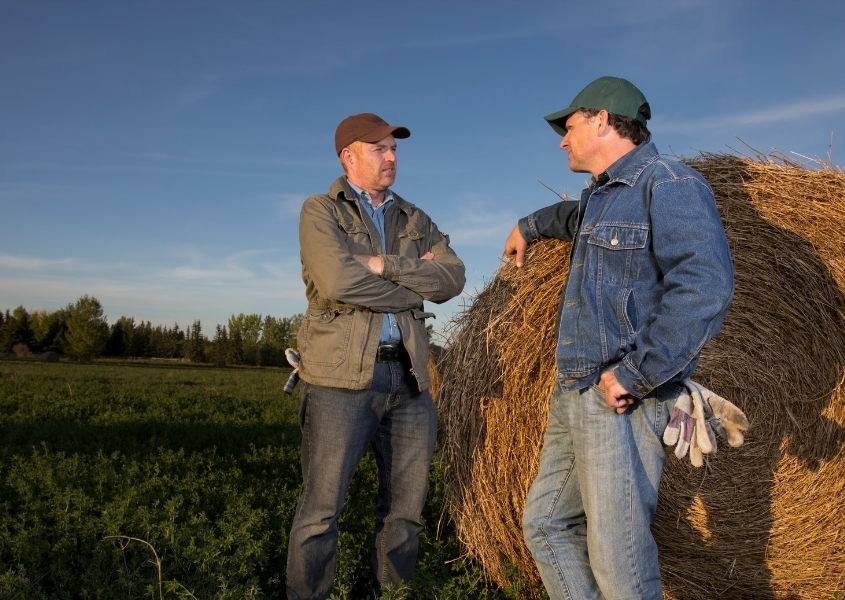
Two Farmers. One Difference.
These two farmers live in the same economy.
They face the same weather.
They work the same hours.
They deal with the same stress.
The difference?
Farmer One believes systems are extra work.
Farmer Two believes systems replace work.
Farmer One trusts his memory.
Farmer Two trusts his process.
Farmer One thinks calm means he’s missing something.
Farmer Two sees calm as a sign the farm is maturing.
Farmer One lives inside the farm.
Farmer Two lives above it.
One is consumed by the noise.
The other directs the rhythm.
The Psychology Behind It
The psychology of systems is simple, but rarely talked about.
- People don’t resist systems because they’re complicated.
They resist them because systems expose how much they’ve been carrying alone. - Systems feel confronting because they force clarity.
And clarity removes excuses. - Chaos is seductive — it feels like movement.
But structure creates actual progress. - Systems aren’t about writing things down.
They’re about letting go.
Not of the farm.
Not of responsibility.
But of the belief that everything depends on you.
Final Reflection
Farmer One isn’t wrong. Farmer Two isn’t better.
They’re simply walking different psychological paths.
One holds the farm together.
The other builds it to stand without him.
And the truth is — both paths are available to every farmer.
But only one leads to calmer seasons, stronger teams, time-freedom, and a business that doesn’t burn you out.
Systems won’t make you perfect.
They won’t stop breakdowns or bring rain.
But they do something more powerful:
They protect your mind.
They steady your team.
They turn chaos into clarity.
And they give your future space to grow.
Farmer One will keep working hard.
Farmer Two will keep building smart.
Both care deeply.
But only one will look back in ten years and say:
“I built a business that didn’t cost me my life.”
Every season shapes your farm.
But the systems you build shape your life.
And in the end, that’s the harvest that matters most.
A Quiet Word to Farmers Who Want to Change Their Story
If you saw yourself in Farmer One — that’s normal. Most farmers start there.
You’re not behind. You’re not failing.
You’ve just been carrying more than anyone should.
The shift starts small.
One habit.
One routine.
One system that frees five minutes… then ten… then hours.
And if, one day, you decide you want a guide on that journey — someone who walks at your pace, in your way — I’m here for that.
If you found this article helpful, share it with your network to help others unlock their farming potential. Don’t forget to like and follow us on social media for more insightful tips: Facebook, Instagram, and LinkedIn. Let’s empower more farmers together!
 Enable Ag
 Why Systems Are the Bridge