Articles related to: reduce key person risk

Most farms think about systems after something goes wrong.
A mistake. A misunderstanding. A handover that didn’t land. 

But one of the best times to build or strengthen systems is actually during onboarding — when a new person joins the farm. 

Not because they’re experienced.
But because they’re not.  

The Mistake: Expecting Systems to Be “Finished” Before Hiring 

Some farm owners try to get everything documented before bringing someone new on board. 

That’s a good instinct — but it comes with a trap. 

They expect the system to answer every question.
Then the new hire starts asking: 

  • “What happens if this changes?” 
  • “Why do we do it this way?” 
  • “Who decides if something’s different?” 
  • “Where does this get recorded?” 

And suddenly it feels like: 

“Didn’t I already explain this?” 

But those questions aren’t a failure of the system.
They’re proof it’s being used. 

Why New People See What You Can’t 

Experienced farmers and long-term staff operate on instinct.
They: 

  • skip steps without noticing 
  • assume background knowledge 
  • compress decisions mentally 
  • fill gaps automatically 

That’s not laziness — it’s expertise. 

But when those same people are asked to document a process on their own, important details get missed. Not intentionally, but because they don’t feel the gaps anymore. 

A new hire does.
They notice: 

  • what isn’t written down 
  • what isn’t clear 
  • what relies on “just knowing” 
  • where the handover breaks 

That makes them incredibly valuable system testers. 

Involving New Hires Creates Buy-In 

There’s another benefit that’s often overlooked: ownership. 

When new people are invited to help refine systems while learning: 

  • they feel trusted 
  • they understand the “why,” not just the “what” 
  • they stop guessing and start contributing sooner 

Instead of being told, “This is how we do it,”
they’re part of shaping how it actually works. 

That buy-in matters — especially on farms where people need to make decisions under pressure. 

Training + Documenting at the Same Time = Better Systems 

One of the strongest approaches we see on farms is this:
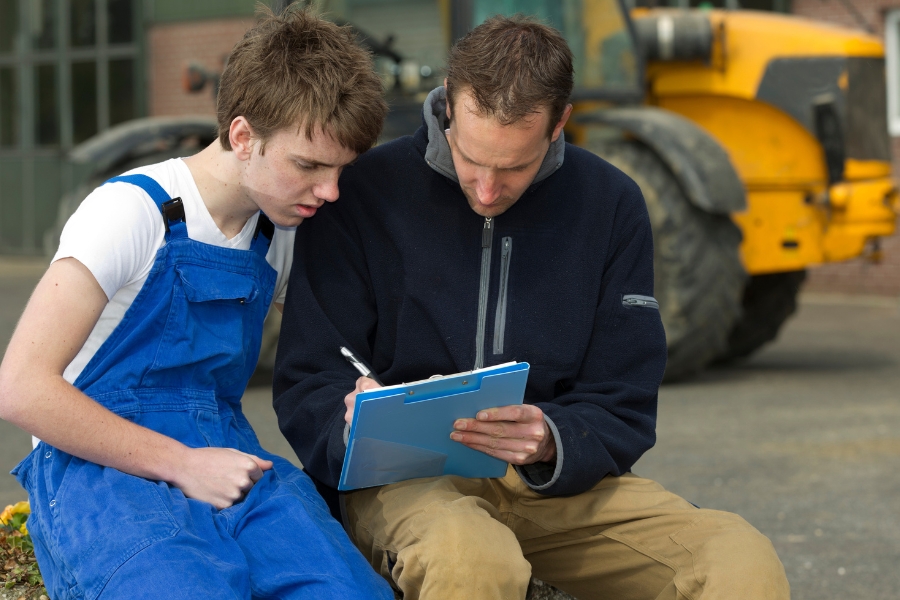
While training a new person, build or refine the system together. 

Here’s why it works: 

  • The trainer explains what they do 
  • The new hire asks questions 
  • Gaps are exposed in real time 
  • Assumptions get challenged 
  • The system gets clearer with every pass 

It’s slower the first time.
But it pays back every time after that. 

Systems Built This Way Are More Realistic 

Systems created in isolation often look good on paper but fall apart in practice. 

Systems built during onboarding are: 

  • grounded in real work 
  • tested immediately 
  • written in plain language 
  • shaped by real questions 

They’re not theoretical.
They’re usable. 

Don’t Be Alarmed by Questions — They’re the Point 

A common reaction we hear is: 

“If they’re asking this many questions, the system must be weak.” 

It’s usually the opposite. 

Questions mean: 

  • the system is being read 
  • the person cares about doing it right 
  • the gaps are being surfaced early 

Every unanswered question is an opportunity to strengthen the system — not just for this hire, but for the next five. 

What This Builds Over Time 

When farms use onboarding as a system-building moment: 

  • knowledge stops living in heads 
  • handovers get cleaner 
  • confidence grows faster 
  • dependency reduces 
  • resilience increases 

The farm doesn’t just train people.
It learns from them. 
Where Enable Ag Fits 

At Enable Ag, we encourage farms to treat onboarding as a two-way process: 

  • train the person 
  • improve the system 

We help farms: 

  • create simple, practical systems 
  • refine them during real use 
  • capture detail without overcomplicating 
  • use tools that make updating easy, not painful 

Because the goal isn’t perfect documentation.
The goal is clear, usable systems that improve every time someone new joins. 

Want to Use Onboarding to Strengthen Your Systems? 

The Ultimate Time-Freedom Checklist is a great place to start — especially if your team is growing and you want to build systems that scale with confidence. 

👉 Download the checklist here 

Don’t wait for perfect.
Use your next hire to build better systems — together. 

 If you found this article helpful, share it with your network to help others unlock their farming potential. Don’t forget to like and follow us on social media for more insightful tips: FacebookInstagram, and LinkedIn. Let’s empower more farmers together!
One of the most common hesitations we hear from farmers is this: 

“I don’t want systems to turn our farm into a factory.” 

Underneath that concern is something important. 

Farmers care deeply about their people.
Family. Long-term staff. Contractors who’ve been around for years.
There’s pride in knowing who does what, how they work, and trusting them to get on with the job. 

So when the word systems comes up, it can sound cold — like replacing judgement with rules, or relationships with checklists. 

But that’s not what good systems do.
In reality, systems don’t replace people — they protect them. 

Where People Get Hurt Without Systems 

On farms without clear systems, the pressure doesn’t disappear.
It concentrates. 

It lands on: 

  • the most capable person 
  • the longest-serving worker 
  • the owner or manager who “just knows” 

Over time, those people carry: 

  • the mental load 
  • the decision fatigue 
  • the constant interruptions 
  • the blame when something is missed 

They become the system. 

And that’s not respect.
That’s risk.  

The Quiet Cost of “We’ll Just Ask Them” 

When knowledge lives in people’s heads: 

  • they can’t switch off 
  • they can’t step away 
  • they can’t hand over cleanly 

Even good, loyal workers start to feel trapped: 

  • “If I don’t show up, things fall apart.” 
  • “If I take time off, I’ll pay for it later.” 
  • “No one else knows how this runs.” 

That’s how burnout creeps in — not from workload alone, but from constant dependency. 

What Farm Systems For People Actually Do 

A good system doesn’t remove people from the equation.
It removes pressure. 

It does things like: 

  • make expectations clear 
  • reduce second-guessing 
  • prevent rework and blame 
  • support safe decision-making 
  • create consistency across shifts 

Instead of relying on memory, mood, or availability, the system holds the line. 

That gives people room to breathe. 

Farm Systems For People Create Safer Teams 

On farms, safety isn’t just physical. It’s cognitive. 

When people know: 

  • what’s expected 
  • where to record things 
  • how handovers work 
  • what to check before acting 

…they make better decisions under pressure. 

Systems don’t slow work down.
They reduce costly mistakes when things move fast. 

Farm Systems For People Make Trust Easier 

Here’s something rarely said out loud: 

It’s hard to trust people when everything is informal. 

Not because people are unreliable — but because uncertainty creates doubt. 

Clear systems: 

  • remove ambiguity 
  • align expectations 
  • make accountability fair 

When the process is clear, trust becomes natural — not forced. 

Farm Systems For People Protect Relationships 

Many farm conflicts aren’t personal.
They’re systemic. 

  • “I thought you were doing that.” 
  • “No one told me.” 
  • “That’s how we’ve always done it.” 
  • “Why didn’t you check?” 

Systems give you something neutral to point to. 

Instead of: 

“Why did you mess this up?”
It becomes:
“Looks like the process wasn’t followed — let’s fix that.” 

That shift protects relationships. 

Farm Systems For People Support Growth Without Losing Culture 

One fear farmers have is that systems will kill the “family feel.” 

In practice, the opposite happens. 

When systems carry the load: 

  • conversations get calmer 
  • leaders stop snapping under pressure 
  • good people stay longer 
  • culture becomes intentional, not accidental 

Systems don’t remove humanity.
They make space for it. 

Where Enable Ag Fits 

At Enable Ag, we don’t design systems to control people.
We design them to: 

  • reduce dependency on individuals 
  • protect good workers from burnout 
  • support safe, consistent decision-making 
  • keep farms running even when people step away 

Our approach combines: 

  • simple, practical systems 
  • tools that fit farm realities 
  • coaching that strengthens people, not replaces them 

Because strong farms aren’t built on heroes.
They’re built on structures that support humans. 

Want to Protect Your People Without Burning Them Out? 

The Ultimate Time-Freedom Checklist helps you identify where pressure is building up around individuals — and how to spread the load without losing trust or efficiency. 

👉 Download the checklist here 

People matter.
Systems protect them. 

If you found this article helpful, share it with your network to help others unlock their farming potential. Don’t forget to like and follow us on social media for more insightful tips: FacebookInstagram, and LinkedIn. Let’s empower more farmers together!

You hope it won’t happen.
But sometimes, it does.
Do you have an emergency plan?

Someone wakes up unwell.
A key team member goes down.
A family emergency pulls someone off the farm for days—or weeks. 

The real damage isn’t just in the illness. It’s in the scramble that follows: 

* Who has the passwords?
* Who knows what jobs are planned?
* Where are the safety forms?
* Who’s going to cover the spraying? 

This post isn’t about panic. It’s about being ready.
Here’s how to build a calm, simple emergency playbook—so the farm keeps moving even when someone critical is suddenly out. 

Why Farms Struggle When Someone’s Out 

Most farms run lean.
Everyone knows their lane. Everyone pitches in. 

But when just one person is unexpectedly missing, you quickly find: 

* Plans live in someone’s head
* No one else has system access
* Instructions haven’t been written down
* The rest of the team are unclear on priorities 

It’s not about the workload—it’s about the access, visibility, and clarity that disappears with that person. 

Step 1: Build the Emergency Plan Contact Sheet 

One document. Everyone should know where it is.
It includes: 

* Staff and family mobile numbers
* Local GP / clinic
* Neighbouring farms
* Vets, agronomists, and contractors
* Key suppliers
* Emergency services (fire, police, poisons info) 

Keep it: 

* Printed and visible
* Saved in your phone
* Accessible through your farm system or shared folder 

When something goes wrong, you want answers in 10 seconds—not 10 phone calls. 

Step 2: Create a “Break Glass” Folder 

What’s in your head that someone else would need in a hurry? 

Store copies (digital or printed) of: 

  1. System logins (farm software, payroll, banking, compliance portals) 
  2. Safety plans and chemical records 
  3. Equipment manuals and service contacts 
  4. Insurance policies 
  5. Farm and paddock maps 
  6. Rosters or calendars 

You’re not sharing this day-to-day. But someone trusted needs to know it exists and where to find it.  

Step 3: Use Job Cards That Explain Themselves 

If you’re away—even for a few days—can someone else pick up where you left off? 

Every task should have: 

  1. A clear name 
  2. Location or block 
  3. Basic checklist 
  4. Reference photo (if needed) 
  5. Contact person 

Skip the whiteboard. Skip the vague notes. If the job lives in the system, anyone can pick it up. 

This is how you stop jobs falling through the cracks during a sudden absence. 

Step 4: Assign One Backup Per Critical Area 

You don’t need a full redundancy plan. Just one backup per key area: 

* Spraying and chem records
* Irrigation
* Staff communication
* Payroll or timesheets
* Tech systems
* Maintenance 

Even if that person doesn’t do the task regularly, they should be: 

* Briefed
* Trained occasionally
* Given just enough access to step in if needed 

Let them shadow or run the task once a quarter. That’s enough to build familiarity. 

Step 5: Keep the Weekly Plan Visible 

Your team shouldn’t have to guess what you were planning if you’re suddenly not around. 

Use a dashboard, job list, or printed run sheet that shows: 

  1. What’s booked this week 
  2. What’s been done 
  3. What’s falling behind 
  4. Who’s assigned 

This reduces panic. It also gives the team confidence to keep going—without needing constant approval or handover. 

Step 6: Make Health-Related Absence Normal to Plan For 

Don’t wait for a crisis to talk about cover. 

Frame it like this: 

“If you or I are off sick for a few days, how would we keep things moving?” 

This takes the emotion out of it—and makes it a leadership conversation, not a personal one. 

It’s not about expecting disaster. It’s about reducing stress when the unexpected happens. 

Optional But Useful: The Emergency Plan “First 3 Days” Checklist 

Create a short action list for whoever steps in: 

  1. Check the job dashboard 
  2. Confirm today’s critical tasks 
  3. Let team leads know the handover 
  4. Pause non-urgent work 
  5. Flag anything safety- or time-sensitive 

Stick this on the wall. Or save it in your system. It helps whoever steps in hold the line, even without all the background info. 

This Isn’t About Over-Planning 

It’s about light structure that lets your farm flex under pressure—not fall apart. 

A few shared documents. A visible job plan. One trusted backup.
That’s all it takes to stop a health issue from becoming a business crisis. 

Want to Set This Up Without the Overwhelm? 

The Ultimate Time-Freedom Checklist shows you exactly where to start.
Use it to spot bottlenecks, assign backups, and build a more resilient farm—fast. 

👉 Download the checklist here 

You can’t stop people getting sick.
But you can stop the farm from going into chaos when they do. 

If you found this article helpful, share it with your network to help others unlock their farming potential. Don’t forget to like and follow us on social media for more insightful tips: FacebookInstagram, and LinkedIn. Let’s empower more farmers together!