Articles related to: Farm Systems

This checklist is designed to: 

  • reduce dependency 
  • invite questions 
  • strengthen systems while training happens 

Use it as a living document — not a one-off form. 

Phase 1: Before Day One (Manager Prep) 

 Identify the core outcomes of the role (not just tasks)
 List the key systems this person will interact with
 Confirm where:
• tasks are logged
• decisions are recorded
• handovers live
 Decide which systems are:
• ready
• rough
• yet to be built
(Rough is okay — unfinished systems are expected) 

Phase 2: Week One (Orientation & Safety) 

 Explain:
• how the farm runs day-to-day
• how decisions are made
• where to ask questions
 Walk through:
• safety-critical systems
• communication norms
• escalation paths
 Introduce the idea: 

“Your questions help us improve how we work.” 

Phase 3: Weeks 1–4 (Training + System Refinement) 

 Train tasks using the system, not just verbally
 Encourage the new hire to:
• note unclear steps
• flag missing information
• suggest improvements
 Capture:
• repeated questions
• assumptions being uncovered
• exceptions to “normal” processes
 Update systems weekly (even briefly)  

Phase 4: First Review (30–45 Days) 

 Ask:
• What was unclear at first?
• What surprised you?
• What still feels fuzzy?
 Review:
• system gaps identified
• updates made
• remaining assumptions
 Decide:
• what to formalise
• what to keep flexible 

Phase 5: Ongoing 

 Treat onboarding as:
• a system-testing phase
 Use future hires to:
• refine, not reinvent
 Reinforce: 

“If it’s unclear, the system needs work — not you.” 


Download the checklist in PDF file here: Farm Onboarding Checklist.

Final Thought 

Onboarding isn’t just about teaching people how the farm works.
It’s about letting fresh eyes show you how the farm could work better.  

Want Help Turning Your Onboarding Into a System? 

Subscribe to the Enable Ag Newsletter and get access to tools, checklists, and tips like this — all designed to make farm systems easier to build, manage, and scale. 

👉 Join the newsletter 

Fewer gaps. Clearer handovers. A farm that trains people — and learns from them. 

If you found this article helpful, share it with your network to help others unlock their farming potential. Don’t forget to like and follow us on social media for more insightful tips: FacebookInstagram, and LinkedIn. Let’s empower more farmers together!

Why two farmers with the same land, same hours, and same work can live entirely different lives.

Two farmers can live the same life on paper and a completely different life in reality. Same land. Same seasons. Same hours. Same challenges.

And yet, one ends the year exhausted and overwhelmed… while the other ends it calm, organised, and in control.

The difference isn’t luck, intelligence, or personality.
It’s the psychology of systems.

Hard work builds farms.
Systems build lives.

To understand this, let me tell you about two farmers.

Farmer One: The Good Operator

Farmer One grew up doing things the way his parents did. He knows his land like his own skin. Every gate that sticks, every trough that leaks, every cow with attitude — it’s all in his head. His days are always full, and that busyness feels necessary. If he’s not flat out, something must be wrong.

His team respects him, but they rely on him for everything — and he wears that like a badge of honour.

When a worker forgets a task, he thinks: “It’s quicker if I just do it myself.”
When someone suggests a new idea: “We’ve always managed fine.”

He’s not lazy. He’s not careless. He cares — deeply. But over time, the farm becomes a mirror of his mind: crowded, reactive, overloaded, always in motion.

Every problem feels urgent. Every breakdown feels personal.
And when systems are mentioned? “I don’t need a fancy system. I just need people to do their job.”

But deep down, he knows the truth.
He’s tired. And the farm can’t run unless he’s there.

A farm run on memory is a farm held together by strain.
This isn’t about skill. It’s about belief.

He believes systems are for big business, not for people like him.
He believes his memory can carry the load.
He believes chaos is normal.
And beliefs shape behaviour long before systems ever do.

Farmer Two: The Quiet Builder

Farmer Two isn’t smarter. He isn’t luckier. He doesn’t have fewer challenges. In fact, for years, he worked just like Farmer One — long hours, everything in his head, fixing problems as they showed up… and quietly proud the farm “needed” him.

Then came a moment of truth — the kind every farmer knows.

It was calving season. He hadn’t eaten all day. A worker misunderstood him. The animals were stressed. He was stressed. And he realised: “I’m repeating the same problems every season.”

That’s when he saw it clearly.
The farm wasn’t the problem.
The lack of systems was.

Not technology. Not dashboards. Just clarity.

So he started small.
One checklist in the dairy.
One weekly planning rhythm.
One paddock treatment sheet.
One short handover chat instead of assuming people understood.

At first, it felt slow — awkward, even. Like learning to write with his non-dominant hand.

Most farmers think systems restrict them.
The truth is, systems remove the weight that’s been restricting them for years.

Then something surprising happened.

The team stopped asking the same questions.
Mistakes dropped.
Jobs flowed.
He stopped carrying the mental burden of remembering everything.

Systems didn’t make him rigid — they made him calm.

He wasn’t less busy — just busy with purpose.
He wasn’t less involved — just involved in the right things.
He wasn’t less important — he was finally leading, not just operating.

He created time not because the farm needed less of him,
but because the farm finally understood him.
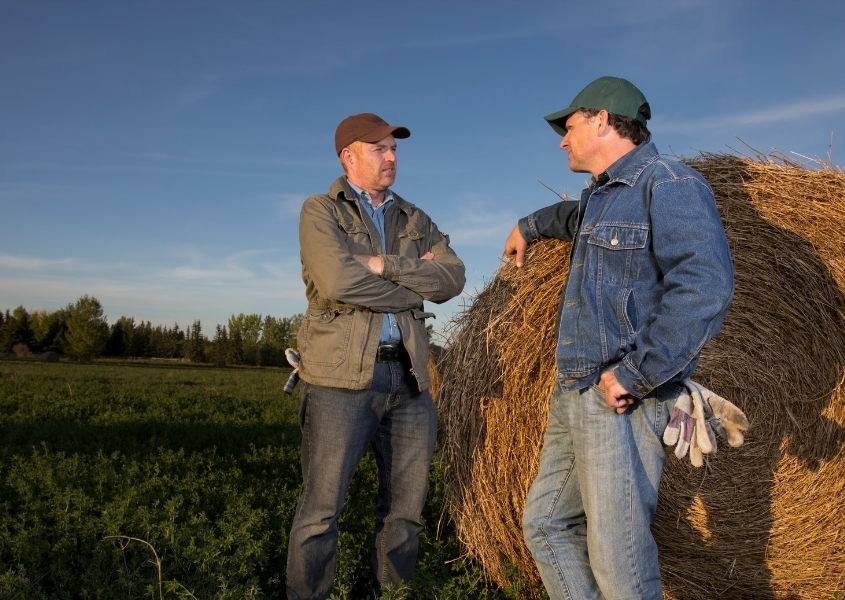
Two Farmers. One Difference.

These two farmers live in the same economy.
They face the same weather.
They work the same hours.
They deal with the same stress.

The difference?

Farmer One believes systems are extra work.
Farmer Two believes systems replace work.

Farmer One trusts his memory.
Farmer Two trusts his process.

Farmer One thinks calm means he’s missing something.
Farmer Two sees calm as a sign the farm is maturing.

Farmer One lives inside the farm.
Farmer Two lives above it.

One is consumed by the noise.
The other directs the rhythm.

The Psychology Behind It

The psychology of systems is simple, but rarely talked about.

  • People don’t resist systems because they’re complicated.
    They resist them because systems expose how much they’ve been carrying alone.
  • Systems feel confronting because they force clarity.
    And clarity removes excuses.
  • Chaos is seductive — it feels like movement.
    But structure creates actual progress.
  • Systems aren’t about writing things down.
    They’re about letting go.

Not of the farm.
Not of responsibility.
But of the belief that everything depends on you.

Final Reflection

Farmer One isn’t wrong. Farmer Two isn’t better.
They’re simply walking different psychological paths.

One holds the farm together.
The other builds it to stand without him.

And the truth is — both paths are available to every farmer.
But only one leads to calmer seasons, stronger teams, time-freedom, and a business that doesn’t burn you out.

Systems won’t make you perfect.
They won’t stop breakdowns or bring rain.

But they do something more powerful:
They protect your mind.
They steady your team.
They turn chaos into clarity.
And they give your future space to grow.

Farmer One will keep working hard.
Farmer Two will keep building smart.

Both care deeply.
But only one will look back in ten years and say:
“I built a business that didn’t cost me my life.”

Every season shapes your farm.
But the systems you build shape your life.
And in the end, that’s the harvest that matters most.

A Quiet Word to Farmers Who Want to Change Their Story

If you saw yourself in Farmer One — that’s normal. Most farmers start there.
You’re not behind. You’re not failing.
You’ve just been carrying more than anyone should.

The shift starts small.
One habit.
One routine.
One system that frees five minutes… then ten… then hours.

And if, one day, you decide you want a guide on that journey — someone who walks at your pace, in your way — I’m here for that.

If you found this article helpful, share it with your network to help others unlock their farming potential. Don’t forget to like and follow us on social media for more insightful tips: FacebookInstagram, and LinkedIn. Let’s empower more farmers together!

Are you familiar about a farm software? Most farmers I meet don’t think of themselves as “tech people.” They see software as something office folks use — not a tool for paddocks, livestock, or tractors. But here’s the truth: when chosen well, software is more than just technology. It’s a silent coach. It brings with it proven ways to run things better, cleaner, and faster — without adding more work.

Dan Martell, author of Buy Back Your Time, put it perfectly:

“When you invest in software for your business, you’re not just buying code — you’re buying best practices baked into it.”

That insight applies beautifully to farms. Because when you use the right tool, you don’t just automate a job — you learn how professionals run that area of their business.

Why a Good Farm Software Teaches You Good Habits

Think about it. A well-designed program doesn’t just do the work; it shows you how the work should flow.

  1. A task management app helps you delegate clearly and prevent double handling.
  2. A maintenance tracker teaches you to log machinery checks before they become breakdowns.
  3. A CRM tool for livestock sales makes follow-ups systematic instead of last-minute.

Every good system quietly builds better habits. And when you commit to using it properly — not half-heartedly — it becomes your farm’s best business mentor.

But There’s a Catch: You Have to Practice Using the Farm Software

Installing software doesn’t create time overnight.

It’s like putting a new header in the shed — it won’t harvest for you unless you learn to drive it well. Every time you adopt a tool, you’re also adopting a set of standards:

  1. How data is entered
  2. How records are shared
  3. How often tasks are reviewed

At first, it might feel slower. But with practice, it shifts chaos into rhythm. Within a few weeks, you’ll find fewer “where’s that file?” moments and more confident decision-making.

When There’s No Perfect App — Create Your Own

Sometimes there’s no ready-made app for your unique process. That’s where Smartsheet comes in — a simple, Excel-based tool that’s powerful enough to systemise just about anything on your farm.

Whether it’s tracking paddock treatments, training records, or machinery jobs, Smartsheet lets you build systems that fit your workflow instead of forcing you into someone else’s.

And the best part? It’s accessible and easy to learn — even for those who don’t love tech.

How We Help at Enable Ag

At Enable Ag, we help you close the gap between technology and time freedom in three key ways:

  1. Custom Smartsheet Templates: Purpose-built for Australian and New Zealand farms, these templates turn complex tasks — from team management to compliance tracking — into simple, repeatable systems.
  2. Practical Courses for Everyday Apps: We’ve designed short, easy-to-follow courses that boost productivity on the applications farmers use most. You name it, we likely have a course for it.
  3. Courses for Modern Tools from Other Industries: We also train you on the most valuable apps being successfully adapted into agriculture — the ones that bring automation and speed without complexity.
  4. Coaching to Increase Digital Literacy: Through our Farmers’ Time-Freedom Program, we coach you and your team to confidently use these tools and weave them into your daily workflow — so the tech serves you, not the other way around.

These tools and trainings don’t just save time — they teach structure, boost confidence, and help your team move together with clarity and consistency.

If you want to explore how we can tailor these systems to your farm, book a quick call here.

Final Thought

When you invest in software — you’re really investing in structure. And structure is what creates time. Good systems don’t replace people; they empower them. They make your farm easier to run, easier to hand over, and easier to enjoy.

Because in the end, technology isn’t about screens and spreadsheets —it’s about giving you the freedom to live the life you built this farm for.

If you found this article helpful, share it with your network to help others unlock their farming potential. Don’t forget to like and follow us on social media for more insightful tips: FacebookInstagram, and LinkedIn. Let’s empower more farmers together!

Are you fulfilled?

Many farmers I meet tell me something like this:
“I don’t need systems. I’m happy with how things are.”


And they mean it. They love the land. They love the animals. They enjoy the rhythm of the seasons. There’s comfort in knowing how things have always been done.

Happiness, in that sense, is real. But here’s the question that often goes unasked: Are you fulfilled?

Because happiness and fulfilment are not the same thing.

The Difference Between Happy and Fulfilled

Happiness often comes from the day-to-day: a good harvest, a new calf, a long lunch with the family on Sunday. It’s about moments.

Fulfilment, on the other hand, is deeper. It’s about looking at your life’s work and saying, “This matters. I’m making a difference. I’ve built something that will last.”

Happiness without fulfilment can feel like eating dessert without ever having a main meal. It’s sweet, but it doesn’t truly satisfy.

Growth Without Contribution Feels Empty

Here’s the paradox. Many farmers are growing. The herd is getting bigger. The machinery is newer. The land is producing more.

But growth without contribution leaves a gap.

  • Contribution to your team — so they can stand on their own feet, not lean on you for every answer.
  • Contribution to your family — so they inherit a business that is resilient, not fragile.
  • Contribution to the land and the industry — so the work you’ve poured your life into continues to mean something.

Without contribution, growth feels like a burden. It’s more work, more responsibility, more stress. And over time, happiness fades.

Fulfilment, however, requires both growth and contribution.


Why Systems Are the Bridge

This is where systems come in.

Systems are not about paperwork or red tape. They’re about freedom.

When you create systems on your farm:

  • The team knows what to do without waiting for your direction.
  • Decisions are consistent, not dependent on one person’s memory or mood.
  • The business can survive and thrive, even when you step back.

A farmer who builds systems is making a contribution that lasts beyond themselves. They’re not just growing grass, stock, or yield. They’re growing sustainability.

And sustainability is what leads to fulfilment.

An Example of a Happy and a Fulfilled Farmer

Think of two farmers.

Farmer A says: “I’m happy.” He’s worked the farm for decades. Everything is in his head. His family relies on him for every decision. He takes pride in being needed. But when he finally wants to step away, the farm can’t function without him. His happiness has limits.


Farmer B also says: “I’m happy.” But he asks a second question: “Am I fulfilled?” He realises that fulfilment comes when his farm can run without him. So, he starts writing things down, training his team, and setting up systems. At first, it feels like extra work. But soon, he notices something powerful: his team is more confident, his family has more freedom, and the business no longer depends on his constant presence. That’s not just happiness—that’s fulfilment.

The Psychological Shift

It takes courage to admit that happiness alone isn’t enough. Because happiness is comfortable. It tells us, “Stay as you are.”

Fulfilment challenges us. It says, “Build something bigger than yourself.”

This is the shift farmers need to make if they want their work to truly matter. It’s not about abandoning happiness. It’s about layering fulfilment on top of it.

And the only way to do that—without burning out, without being trapped by your own business—is to put systems in place.

A Simple Test: Am I Fulfilled?

Ask yourself two questions:

  1. Am I happy?
  2. Am I fulfilled?

If the answer to the first is “yes,” celebrate it. You’ve earned it.
If the answer to the second is “not yet,” then you know what’s missing: contribution, sustainability, and systems.

Final Thought

Happiness is the smile you wear at the end of a good day’s work.
Fulfilment is the peace you feel when you know your farm, your family, and your team can thrive—today and tomorrow—because of the systems you’ve built.

Don’t settle for happy. Aim for fulfilled. We also invite you to explore our free tools — designed to build something bigger for you.

If you found this article helpful, share it with your network to help others unlock their farming potential. Don’t forget to like and follow us on social media for more insightful tips: FacebookInstagram, and LinkedIn. Let’s empower more farmers together!

The search for the “perfect employees” might be the single biggest mistake farm owners make. Not only is this approach time-consuming, but it also creates a dependency. The reality? The ideal employee doesn’t exist—but your farm can thrive with coachable team members who align with your operational core values and embrace following systems in place.

Hence, at Enable Ag, we believe transitioning from a people-dependent to a systems-driven farm by core values aligned team members can unlock sustainability, resilience, and, most importantly, time freedom for you and your family.

The Cost of Chasing Perfect Employees

Relying on highly skilled individuals might feel like the safest bet, but it makes your farm vulnerable. When key team members leave, chaos often ensues. Without clear systems in place, remaining employees are left scrambling to fill the gaps, leading to errors, delays, and stress.

Instead of chasing unicorn employees, why not hire for shared values and train your team using documented workflows? Like schools that train students for success, your farm can foster a culture where systems guide operations.

Why Systems Matter As Much As People

The relationship between systems and personnel is inversely proportional. The better your systems, the less reliant you are on unicorns. Systems can reduce human error, ensure consistency, and build a scalable business model.

Consider this: A documented procedure for setting up irrigation or processing payroll ensures clarity and reduces the margin for mistakes. Tools like Loom or Scribe simplify creating these Standard Operating Procedures (SOPs) with minimal effort.

What You Gain with a Systems-First Approach

  1. Operational Resilience: Systems maintain your farm’s stability during staff transitions or absences.
  2. Scalability: Hire based on cultural fit, upskill employees, and rely on systems for expertise.
  3. Improved Team Dynamics: Defined workflows eliminate confusion, foster trust, and boost morale.
  4. Time Freedom: Free yourself from micromanagement and focus on strategy or personal priorities.

Stop-Searching-for-Perfect-Employees—Heres-Why-Your-Farm-Needs-Strong-Systems-Instead

How to Start Building Systems on Your Farm

  1. Start with High-Impact Tasks: Identify recurring processes, like livestock management or irrigation schedules, and create simple systems for them. Start with the ones that are going to happen sooner than later.
  2. Leverage Technology: Tools like Smartsheet and Loom make creating and managing systems intuitive.
  3. Test and Refine: Implement the system, gather team feedback, and improve until it’s seamless.
  4. Focus on the 80/20 Rule: Target the 20% of activities that yield 80% of your farm’s results. Finish one system at a time.

Why Farmers Need to Shift Their Mindset

Too often, farmers believe that they need to handle everything themselves. This mindset traps them in reactive work, constantly putting out fires instead of planning for growth.

The solution? A systems-first approach that enables delegation, empowers your team, and makes your farm sustainable even in your absence.

From Stress to Sustainability

Building robust systems isn’t just about efficiency; it’s about creating a farm that thrives independently. Imagine reclaiming your weekends, spending quality time with your family, and knowing your farm runs smoothly without you constantly overseeing every detail.

Don’t let outdated practices hold you back. Contact Enable Ag for a FREE personalised consultation to check if it’s the right program for you toward operational excellence and personal freedom.

If you found this article helpful, share it with your network to help others unlock their farming potential. Don’t forget to like and follow us on social media for more insightful tips: Facebook, Instagram, and LinkedIn. Let’s empower more farmers together!

Life as a farmer can be incredibly rewarding, but it often comes with long work hours, numerous responsibilities, and limited personal time. Time management becomes a crucial skill for farmers looking to strike a balance between work and personal life while maximising their productivity. In this article, we will explore six effective time management strategies tailored specifically for time-poor farmers. By implementing these strategies, you can reclaim control over your time and create a more balanced and fulfilling farm life.

1. Assessing Your Time

Before implementing any time management strategies, it is important to assess how you currently utilise your time. Take a moment to evaluate your daily tasks and activities, identifying areas where time may be wasted or allocated inefficiently. By gaining insights into your time usage patterns, you can make informed decisions about where to make adjustments and improvements.

At Enable Ag, we understand the unique challenges faced by time-poor farmers. Our expertise lies in helping farmers optimise their time and achieve a better work-life balance by helping them play visionary and leadership roles more than farm-hand and manager roles. To get started on your journey to more time-freedom, download our free ‘Farmers’ Ultimate Freedom Checklist,’ which provides valuable insights and actionable steps to help you regain control over your time.

2. Prioritising Tasks

One of the keys to effective time management is prioritising tasks. As a farmer, it’s important to identify the essential tasks that align with your farm goals and focus on completing them first. Consider utilising techniques like the Eisenhower Matrix or ABC analysis to categorise tasks based on their importance and urgency. By focusing your efforts on high-priority tasks, you can make significant progress while avoiding unnecessary time spent on low-value activities.

Pro-tip: If you are aiming to become a proactive farmer, you shall block time every week to do tasks in ‘Important, Not Urgent’ quadrant of Eisenhower Matrix.

3. Delegation and Outsourcing

Recognise that you can’t do it all on your own. Delegating non-essential tasks or outsourcing certain responsibilities can free up valuable time and reduce your workload. Consider identifying tasks that can be effectively delegated to farm employees or outsourcing services from reliable sources. Enable Ag can guide you in determining which tasks can be delegated and how to delegate effectively, ensuring that you have more time to focus on crucial aspects of your farm operations.

Your time is your most precious resource. At Enable Ag, we made it our mission to help farmers reclaim their time while increasing their family farm's productivity. Time management strategies are an integral part of our Time-Freedom Program.

Your time is your most precious resource. At Enable Ag, we made it our mission to help farmers reclaim control over their time while increasing their family farm’s productivity. Time management strategies are an integral part of our Time-Freedom Program.

4. Time Blocking and Scheduling

Implementing a structured schedule and utilising time blocking techniques can be immensely beneficial for time-poor farmers. Allocate specific time slots for different tasks and activities, allowing for better organisation and increased productivity. By dedicating time blocks to specific farm operations, personal time, and breaks, you can ensure that each aspect of your life receives the attention it deserves. Enable Ag’s Time-Freedom Program offers personalised support and guidance in creating effective time blocking schedules that work for your unique farm and lifestyle.

5. Automation and Technology Tools

Incorporating automation and leveraging technology tools can streamline your farm processes and save you valuable time. From farm management software to communication tools and record-keeping systems, technology offers a range of solutions to enhance efficiency and productivity. Enable Ag can assist you in identifying the most suitable technology tools for your farm, helping you harness their full potential and achieve time-saving benefits.

6. Setting Boundaries and Practicing Self-Care

Maintaining a healthy work-life balance requires setting boundaries and prioritising self-care. It’s important to establish clear boundaries between work and personal time to avoid overworking and burnout. Remember to take breaks, engage in activities that recharge you, and prioritise your well-being. Enable Ag’s Time-Freedom Program focuses not only on optimising farm operations but also on empowering farmers to lead balanced and fulfilling lives.

By implementing these time management strategies, you can reclaim control over your time, increase productivity, and achieve a better work-life balance. Enable Ag is dedicated to supporting farmers on their journey to more time-freedom and balanced lives. Start your journey today by downloading our free ‘Farmers’ Ultimate Freedom Checklist‘ from our website. Together, we can revolutionise your farm operations and create lasting positive change for you and your family.

Remember, your time is a valuable resource. Choose to invest it wisely and enjoy the rewards of a more fulfilling and balanced farm life.