Articles related to: farm culture

Why two farmers with the same land, same hours, and same work can live entirely different lives.

Two farmers can live the same life on paper and a completely different life in reality. Same land. Same seasons. Same hours. Same challenges.

And yet, one ends the year exhausted and overwhelmed… while the other ends it calm, organised, and in control.

The difference isn’t luck, intelligence, or personality.
It’s the psychology of systems.

Hard work builds farms.
Systems build lives.

To understand this, let me tell you about two farmers.

Farmer One: The Good Operator

Farmer One grew up doing things the way his parents did. He knows his land like his own skin. Every gate that sticks, every trough that leaks, every cow with attitude — it’s all in his head. His days are always full, and that busyness feels necessary. If he’s not flat out, something must be wrong.

His team respects him, but they rely on him for everything — and he wears that like a badge of honour.

When a worker forgets a task, he thinks: “It’s quicker if I just do it myself.”
When someone suggests a new idea: “We’ve always managed fine.”

He’s not lazy. He’s not careless. He cares — deeply. But over time, the farm becomes a mirror of his mind: crowded, reactive, overloaded, always in motion.

Every problem feels urgent. Every breakdown feels personal.
And when systems are mentioned? “I don’t need a fancy system. I just need people to do their job.”

But deep down, he knows the truth.
He’s tired. And the farm can’t run unless he’s there.

A farm run on memory is a farm held together by strain.
This isn’t about skill. It’s about belief.

He believes systems are for big business, not for people like him.
He believes his memory can carry the load.
He believes chaos is normal.
And beliefs shape behaviour long before systems ever do.

Farmer Two: The Quiet Builder

Farmer Two isn’t smarter. He isn’t luckier. He doesn’t have fewer challenges. In fact, for years, he worked just like Farmer One — long hours, everything in his head, fixing problems as they showed up… and quietly proud the farm “needed” him.

Then came a moment of truth — the kind every farmer knows.

It was calving season. He hadn’t eaten all day. A worker misunderstood him. The animals were stressed. He was stressed. And he realised: “I’m repeating the same problems every season.”

That’s when he saw it clearly.
The farm wasn’t the problem.
The lack of systems was.

Not technology. Not dashboards. Just clarity.

So he started small.
One checklist in the dairy.
One weekly planning rhythm.
One paddock treatment sheet.
One short handover chat instead of assuming people understood.

At first, it felt slow — awkward, even. Like learning to write with his non-dominant hand.

Most farmers think systems restrict them.
The truth is, systems remove the weight that’s been restricting them for years.

Then something surprising happened.

The team stopped asking the same questions.
Mistakes dropped.
Jobs flowed.
He stopped carrying the mental burden of remembering everything.

Systems didn’t make him rigid — they made him calm.

He wasn’t less busy — just busy with purpose.
He wasn’t less involved — just involved in the right things.
He wasn’t less important — he was finally leading, not just operating.

He created time not because the farm needed less of him,
but because the farm finally understood him.
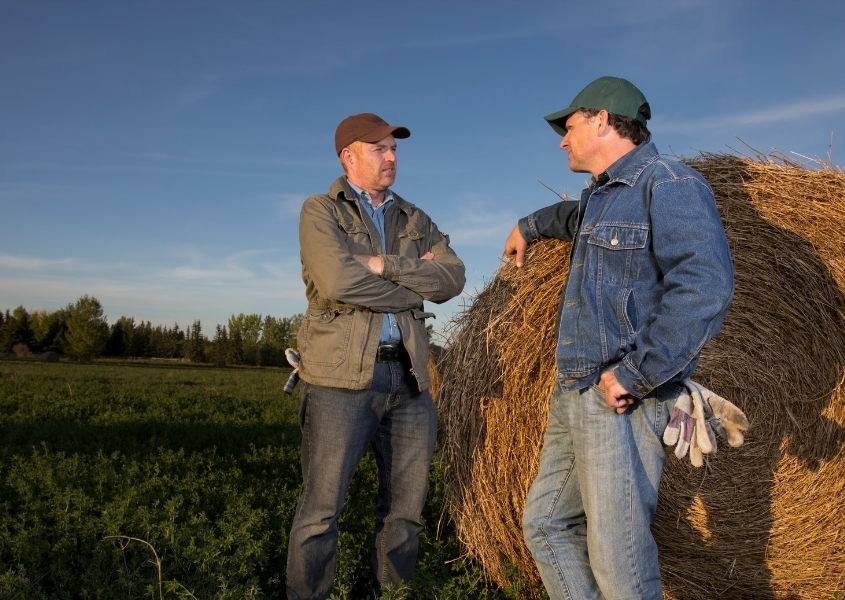
Two Farmers. One Difference.

These two farmers live in the same economy.
They face the same weather.
They work the same hours.
They deal with the same stress.

The difference?

Farmer One believes systems are extra work.
Farmer Two believes systems replace work.

Farmer One trusts his memory.
Farmer Two trusts his process.

Farmer One thinks calm means he’s missing something.
Farmer Two sees calm as a sign the farm is maturing.

Farmer One lives inside the farm.
Farmer Two lives above it.

One is consumed by the noise.
The other directs the rhythm.

The Psychology Behind It

The psychology of systems is simple, but rarely talked about.

  • People don’t resist systems because they’re complicated.
    They resist them because systems expose how much they’ve been carrying alone.
  • Systems feel confronting because they force clarity.
    And clarity removes excuses.
  • Chaos is seductive — it feels like movement.
    But structure creates actual progress.
  • Systems aren’t about writing things down.
    They’re about letting go.

Not of the farm.
Not of responsibility.
But of the belief that everything depends on you.

Final Reflection

Farmer One isn’t wrong. Farmer Two isn’t better.
They’re simply walking different psychological paths.

One holds the farm together.
The other builds it to stand without him.

And the truth is — both paths are available to every farmer.
But only one leads to calmer seasons, stronger teams, time-freedom, and a business that doesn’t burn you out.

Systems won’t make you perfect.
They won’t stop breakdowns or bring rain.

But they do something more powerful:
They protect your mind.
They steady your team.
They turn chaos into clarity.
And they give your future space to grow.

Farmer One will keep working hard.
Farmer Two will keep building smart.

Both care deeply.
But only one will look back in ten years and say:
“I built a business that didn’t cost me my life.”

Every season shapes your farm.
But the systems you build shape your life.
And in the end, that’s the harvest that matters most.

A Quiet Word to Farmers Who Want to Change Their Story

If you saw yourself in Farmer One — that’s normal. Most farmers start there.
You’re not behind. You’re not failing.
You’ve just been carrying more than anyone should.

The shift starts small.
One habit.
One routine.
One system that frees five minutes… then ten… then hours.

And if, one day, you decide you want a guide on that journey — someone who walks at your pace, in your way — I’m here for that.

If you found this article helpful, share it with your network to help others unlock their farming potential. Don’t forget to like and follow us on social media for more insightful tips: FacebookInstagram, and LinkedIn. Let’s empower more farmers together!
Every farm runs on a rhythm—seasons, stock, weather, people. Some days you need give (flexibility). Other days you need glue (connection). Get the balance wrong and the wheels wobble: jobs slip, safety drops, and good people drift. Get it right and the place hums—even when you’re off-farm.

Below are four common patterns we see on farms. None of them are “theory”—they show up in rosters, radio calls, toolbox talks, and how decisions are made in the yards.

The Tight Leash (low flexibility, low connection)

Everything’s dictated from the top: who starts when, how every job is done, which paddock gets priority. People feel watched and still left out. You get compliance without commitment. Tasks happen, but initiative vanishes. Result: turnover, quiet resentment, and leaders drowning in questions.

Tell-tale signs: constant micromanaging on the UHF, staff waiting for instructions, no one volunteers ideas at smoko.

The Lonely Paddock (high flexibility, low connection)

Everyone works their own way and hours, but there’s no shared plan. The spray run changes and the header operator isn’t told. The night milker alters the routine and morning shift is caught out. Freedom without an anchor turns into rework and risk.

Tell-tale signs: duplicated effort, surprises at changeover, “I didn’t know” becomes the most common sentence.

The Warm Shed (low flexibility, high connection)

Good vibe, poor autonomy. The crew gets on, but decisions are bottlenecked with the owner or manager. It feels safe, yet growth stalls because no one can move without approval. When pressure hits (calving/lambing/harvest), the system seizes.

Tell-tale signs: pleasant meetings, slow progress, leader overloaded with small decisions.

The Strong Mob (high flexibility, high connection)

This is the target. People are trusted to crack on, and they’re tied into a clear plan. Routines are known, exceptions are flagged early, and systems carry the memory so the farm isn’t leaning on one brain.

Tell-tale signs: short, sharp check-ins; clean handovers; fewer “gotchas”; the place still runs when the boss is off-farm.

Why this balance matters on farms

  • Seasonal peaks: lambing, calving, harvest, irrigation—rosters shift fast. Flexibility is non-negotiable.
  • Mixed crews: family, full-timers, casuals, contractors—connection can evaporate unless it’s designed.
  • Safety & biosecurity: without shared habits, one shortcut can cost lives, stock health, or markets.
  • Succession & time off: a farm that only runs when one person is present isn’t sustainable, and it isn’t saleable.

Three practical moves to get the balance right

1) Track outcomes, not hours

Swap “Were you here?” for “Did the important things get done?”

  • Examples: hectares sprayed, cows milked on time with zero mastitis flags, pasture cover targets met, TMR mixed to spec, breakdown hours reduced, water points checked and logged.
  • Tool: a simple whiteboard or Smartsheet list with weekly priorities and owners. Green = done, red = stuck, grey = not needed.

Why it helps: People keep freedom in how they work, and the team stays aligned on what matters.

2) Set small rituals that create connection

Connection isn’t a staff barbecue once a year—it’s routine.

  • Daily: 7-minute yard or dairy huddle: weather, hazards, top three jobs, who’s on call.
  • Shift handover: photo of the board + 60-second voice note in WhatsApp: what changed / what’s next / what needs the boss.
  • Weekly: 20-minute plan on Monday (paddock map out, targets set).
  • Monthly: toolbox talk: one safety focus, one system tweak, one win.

Why it helps: People won’t drift if the farm has steady beats. Short, predictable, low-friction.

3) Coach clear communication (make it a habit)

Clarity is currency on farms.

  • Radio rule: state the task + location + risk, and the receiver repeats back.
    • “Drench mix changed to 12 mL/head in north yards—copy?”
  • Photo proof: repairs, chemical labels, troughs filled—snap and share.
  • Decision log: a “what changed” column on the shed board prevents surprises.

Why it helps: Flex stays high because people aren’t scared to decide—but they keep the team in the loop.

Optional extras that pay off to create rhythm

  • Anchor days: choose one day most weeks when the full crew overlaps for training and tricky jobs.
  • Two-hat roles: pair a task with stewardship (e.g., “water systems lead”, “chemical store lead”) so knowledge isn’t trapped.
  • Simple SOPs: one page, one photo, one checklist—store them where work happens (shed wall/phone).

Try this this week: The Rhythm

Pick one action that strengthens connection without strangling flexibility:

  • Add the 7-minute start-of-day huddle,
  • Introduce the repeat-back radio rule, or
  • Write the top three weekly outcomes on the board and point names at them.

Small, steady improvements beat big announcements that fade.

Working Rhythm

Farms don’t need corporate buzzwords. They need working rhythm that let people move freely and pull together. When you build that balance on purpose, you protect safety, lift performance, and make the place less dependent on you.

That’s a farm that lasts—and a team that’s proud to be part of it. Add one rhythm this week—see what happens. Want help choosing the right one? Click here.

If you found this article helpful, share it with your network to help others unlock their farming potential. Don’t forget to like and follow us on social media for more insightful tips: FacebookInstagram, and LinkedIn. Let’s empower more farmers together!

Are you fulfilled?

Many farmers I meet tell me something like this:
“I don’t need systems. I’m happy with how things are.”


And they mean it. They love the land. They love the animals. They enjoy the rhythm of the seasons. There’s comfort in knowing how things have always been done.

Happiness, in that sense, is real. But here’s the question that often goes unasked: Are you fulfilled?

Because happiness and fulfilment are not the same thing.

The Difference Between Happy and Fulfilled

Happiness often comes from the day-to-day: a good harvest, a new calf, a long lunch with the family on Sunday. It’s about moments.

Fulfilment, on the other hand, is deeper. It’s about looking at your life’s work and saying, “This matters. I’m making a difference. I’ve built something that will last.”

Happiness without fulfilment can feel like eating dessert without ever having a main meal. It’s sweet, but it doesn’t truly satisfy.

Growth Without Contribution Feels Empty

Here’s the paradox. Many farmers are growing. The herd is getting bigger. The machinery is newer. The land is producing more.

But growth without contribution leaves a gap.

  • Contribution to your team — so they can stand on their own feet, not lean on you for every answer.
  • Contribution to your family — so they inherit a business that is resilient, not fragile.
  • Contribution to the land and the industry — so the work you’ve poured your life into continues to mean something.

Without contribution, growth feels like a burden. It’s more work, more responsibility, more stress. And over time, happiness fades.

Fulfilment, however, requires both growth and contribution.


Why Systems Are the Bridge

This is where systems come in.

Systems are not about paperwork or red tape. They’re about freedom.

When you create systems on your farm:

  • The team knows what to do without waiting for your direction.
  • Decisions are consistent, not dependent on one person’s memory or mood.
  • The business can survive and thrive, even when you step back.

A farmer who builds systems is making a contribution that lasts beyond themselves. They’re not just growing grass, stock, or yield. They’re growing sustainability.

And sustainability is what leads to fulfilment.

An Example of a Happy and a Fulfilled Farmer

Think of two farmers.

Farmer A says: “I’m happy.” He’s worked the farm for decades. Everything is in his head. His family relies on him for every decision. He takes pride in being needed. But when he finally wants to step away, the farm can’t function without him. His happiness has limits.


Farmer B also says: “I’m happy.” But he asks a second question: “Am I fulfilled?” He realises that fulfilment comes when his farm can run without him. So, he starts writing things down, training his team, and setting up systems. At first, it feels like extra work. But soon, he notices something powerful: his team is more confident, his family has more freedom, and the business no longer depends on his constant presence. That’s not just happiness—that’s fulfilment.

The Psychological Shift

It takes courage to admit that happiness alone isn’t enough. Because happiness is comfortable. It tells us, “Stay as you are.”

Fulfilment challenges us. It says, “Build something bigger than yourself.”

This is the shift farmers need to make if they want their work to truly matter. It’s not about abandoning happiness. It’s about layering fulfilment on top of it.

And the only way to do that—without burning out, without being trapped by your own business—is to put systems in place.

A Simple Test: Am I Fulfilled?

Ask yourself two questions:

  1. Am I happy?
  2. Am I fulfilled?

If the answer to the first is “yes,” celebrate it. You’ve earned it.
If the answer to the second is “not yet,” then you know what’s missing: contribution, sustainability, and systems.

Final Thought

Happiness is the smile you wear at the end of a good day’s work.
Fulfilment is the peace you feel when you know your farm, your family, and your team can thrive—today and tomorrow—because of the systems you’ve built.

Don’t settle for happy. Aim for fulfilled. We also invite you to explore our free tools — designed to build something bigger for you.

If you found this article helpful, share it with your network to help others unlock their farming potential. Don’t forget to like and follow us on social media for more insightful tips: FacebookInstagram, and LinkedIn. Let’s empower more farmers together!

Transitions are an inevitable part of any farm operation. Employees move on for a variety of reasons—new job opportunities, family circumstances, or employer decisions. Whatever the reason, the period between the decision to leave and the actual departure can be a tricky and sensitive time. Managers often struggle with maintaining motivation levels, while departing employees may feel disconnected or even disinterested in their remaining responsibilities.

This blog addresses how to make the most of such transitions, ensuring a smooth handover, minimising disruptions, and preserving a positive team culture. We’ll cover both farm managers’ and farmhands’ roles in this process, with actionable steps to turn potential friction into an opportunity for growth.

The Opportunity Hidden in Transitions

The notice period can feel awkward. Employees might become less motivated, and managers may feel uncertain about what they can expect from someone who’s already got one foot out the door. But this period also represents an opportunity. For farm managers, it’s the time to assess which tasks are heavily reliant on the outgoing employee and to establish systems that will ensure continuity.

For farmhands, it’s a chance to leave a positive mark by sharing the knowledge they’ve gained, making it easier for others to take over their responsibilities, and preserving the farm’s productivity and culture even after they’ve moved on.

Proactive Management During Transitions

To manage the challenges that arise when a team member is about to leave, proactive steps can make all the difference:

  1. Identify Critical Responsibilities
    Take a good look at the tasks the departing employee is handling. Are there specific areas where the farm is too reliant on this individual? Now is the time to create a plan to distribute these tasks among the remaining team members.
  2. Document Processes
    Encourage departing employees to document their daily activities, processes, and unique know-how about the tasks they have been handling. This documentation will become a crucial training resource for those stepping into their roles.
  3. Structured Knowledge Transfer
    Once the documentation is complete, plan training sessions. Depending on the farm’s needs, different responsibilities might be assigned to different people, making training more efficient. This ensures that responsibilities are properly covered and reduces confusion once the employee leaves.

Smooth Transitions: Proactive Tips for Farm Managers Handling Employee Departures + General Checklist

Dealing with Notice Period Friction

Despite the best efforts, notice periods can become tense. When employees feel disconnected, they might start taking excessive leave or fail to fulfil their duties diligently. If friction arises, consider these actions:

  • Assess the Impact on the Team
    A disengaged employee can affect the morale of the entire team. Managers should assess whether keeping the employee through their notice period is beneficial. If not, it may be better to release them early while still compensating them for the remainder of their notice, following Fair Work guidelines or with advice from an external HR advisor.
  • Maintain a Positive Reference Relationship
    Encourage departing employees to maintain a good relationship even as they exit. The value of a positive reference cannot be understated, and employees who leave respectfully can count on their former employers for future recommendations. This goodwill also reflects well on the farm, contributing to a positive reputation in the wider agricultural community.

Creating a Lasting Legacy Through Open Communication

As a farm manager, starting the notice period with an open, honest conversation can set the tone for a smoother transition. Use a checklist to guide your discussion with the departing employee, focusing on how you can support each other during this time. Emphasise the importance of leaving a lasting legacy by encouraging them to exceed their past performance—this is an opportunity for them to leave a meaningful mark. By connecting emotionally and understanding their perspective, you can inspire loyalty and ensure they feel valued even in their final days. Regular weekly check-ins allow you to monitor progress, provide guidance, and address any areas where reinforcement or encouragement may be needed. Remember, this is about leaving a positive legacy that reflects both the employee’s contributions and the farm’s standards.

The Farmhand’s Responsibility

From the farmhand’s perspective, leaving a job gracefully is crucial for their professional reputation. Here are a few key practices for farmhands during the notice period:

  • Systemise Your Role
    Pass on your knowledge clearly and comprehensively to ensure your responsibilities can be picked up seamlessly.
  • Respectful Communication
    Be open with feedback—both what worked well and what could improve. Deliver feedback constructively to help the team thrive even after you leave.
  • Leave a Lasting Positive Impression
    The way you leave a job reflects your personality and professionalism. Even if loyalty doesn’t mean staying forever, demonstrating a commitment to the farm’s well-being until the last day shows true character.

Make Transitions Effective: Follow this Employee Transition Checklist (Available for Download)

For Farm Managers:

  • Identify critical tasks dependent on the departing employee.
  • Have the departing employee document their processes.
  • Facilitate training sessions to ensure a smooth handover.
  • Maintain open communication with the team to gauge morale.

For Departing Farmhands:

  • Document your daily tasks and important knowledge.
  • Assist in training your replacement or team members taking over your tasks.
  • Provide constructive feedback to both managers and team members.
  • Strive to leave a positive legacy within the farm.

Understanding Employee Loyalty in Modern Times

Farm owners need to adapt to changing norms. Long-term loyalty, like the expectation that employees stay for ten or more years, is increasingly rare. Instead, loyalty can be demonstrated in different ways: through how an employee helps with transitions, promotes the farm’s culture, or supports new team members even after leaving.

The concept of “adult daycare” may sound blunt, but it speaks to the evolving role of businesses as places of growth, where people come in, contribute, evolve, and eventually move on. Accepting this as part of the farming business model will allow for smoother transitions and less friction during those inevitable periods of change.

Transitions are a natural part of farm life, but they don’t have to disrupt your operations or team morale. With the right strategies, you can turn employee departures into opportunities for growth and improvement. Ready to take the next step? Access our Employee Transition Checklist to guide you in building a resilient, well-prepared farm team. Let Enable Ag help you create a sustainable, motivated workforce that thrives through change.

If you found this article helpful, share it with your network to help others unlock their farming potential. Don’t forget to like and follow us on social media for more insightful tips: Facebook, Instagram, and LinkedIn. Let’s empower more farmers together!