Articles related to: Farm Business Planning

Are you fulfilled?

Many farmers I meet tell me something like this:
“I don’t need systems. I’m happy with how things are.”


And they mean it. They love the land. They love the animals. They enjoy the rhythm of the seasons. There’s comfort in knowing how things have always been done.

Happiness, in that sense, is real. But here’s the question that often goes unasked: Are you fulfilled?

Because happiness and fulfilment are not the same thing.

The Difference Between Happy and Fulfilled

Happiness often comes from the day-to-day: a good harvest, a new calf, a long lunch with the family on Sunday. It’s about moments.

Fulfilment, on the other hand, is deeper. It’s about looking at your life’s work and saying, “This matters. I’m making a difference. I’ve built something that will last.”

Happiness without fulfilment can feel like eating dessert without ever having a main meal. It’s sweet, but it doesn’t truly satisfy.

Growth Without Contribution Feels Empty

Here’s the paradox. Many farmers are growing. The herd is getting bigger. The machinery is newer. The land is producing more.

But growth without contribution leaves a gap.

  • Contribution to your team — so they can stand on their own feet, not lean on you for every answer.
  • Contribution to your family — so they inherit a business that is resilient, not fragile.
  • Contribution to the land and the industry — so the work you’ve poured your life into continues to mean something.

Without contribution, growth feels like a burden. It’s more work, more responsibility, more stress. And over time, happiness fades.

Fulfilment, however, requires both growth and contribution.

 

Why Systems Are the Bridge

This is where systems come in.

Systems are not about paperwork or red tape. They’re about freedom.

When you create systems on your farm:

  • The team knows what to do without waiting for your direction.
  • Decisions are consistent, not dependent on one person’s memory or mood.
  • The business can survive and thrive, even when you step back.

A farmer who builds systems is making a contribution that lasts beyond themselves. They’re not just growing grass, stock, or yield. They’re growing sustainability.

And sustainability is what leads to fulfilment.

An Example of a Happy and a Fulfilled Farmer

Think of two farmers.

Farmer A says: “I’m happy.” He’s worked the farm for decades. Everything is in his head. His family relies on him for every decision. He takes pride in being needed. But when he finally wants to step away, the farm can’t function without him. His happiness has limits.


Farmer B also says: “I’m happy.” But he asks a second question: “Am I fulfilled?” He realises that fulfilment comes when his farm can run without him. So, he starts writing things down, training his team, and setting up systems. At first, it feels like extra work. But soon, he notices something powerful: his team is more confident, his family has more freedom, and the business no longer depends on his constant presence. That’s not just happiness—that’s fulfilment.

The Psychological Shift

It takes courage to admit that happiness alone isn’t enough. Because happiness is comfortable. It tells us, “Stay as you are.”

Fulfilment challenges us. It says, “Build something bigger than yourself.”

This is the shift farmers need to make if they want their work to truly matter. It’s not about abandoning happiness. It’s about layering fulfilment on top of it.

And the only way to do that—without burning out, without being trapped by your own business—is to put systems in place.

A Simple Test: Am I Fulfilled?

Ask yourself two questions:

  1. Am I happy?
  2. Am I fulfilled?

If the answer to the first is “yes,” celebrate it. You’ve earned it.
If the answer to the second is “not yet,” then you know what’s missing: contribution, sustainability, and systems.

Final Thought

Happiness is the smile you wear at the end of a good day’s work.
Fulfilment is the peace you feel when you know your farm, your family, and your team can thrive—today and tomorrow—because of the systems you’ve built.

Don’t settle for happy. Aim for fulfilled. We also invite you to explore our free tools — designed to build something bigger for you.

If you found this article helpful, share it with your network to help others unlock their farming potential. Don’t forget to like and follow us on social media for more insightful tips: FacebookInstagram, and LinkedIn. Let’s empower more farmers together!
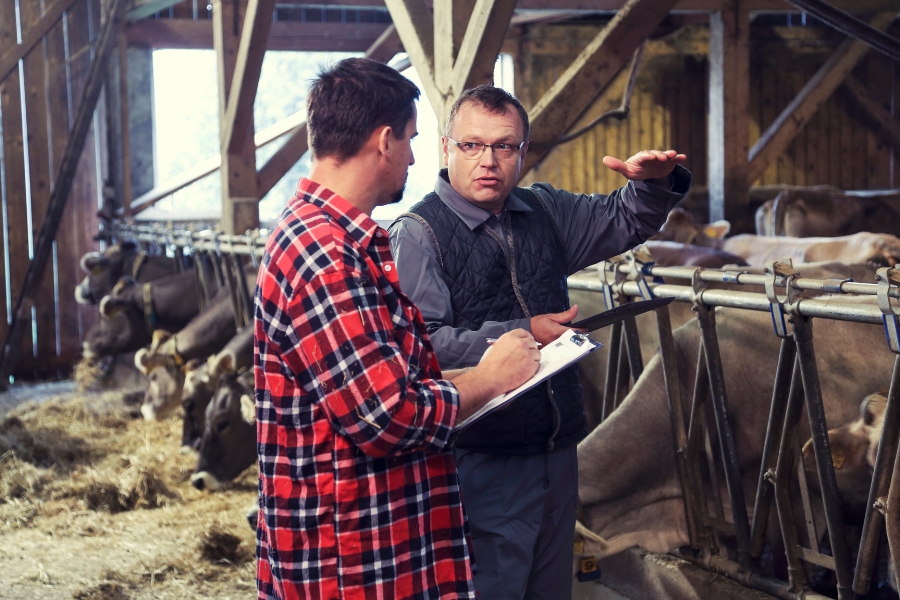
“Should I feel guilty for delegating the hard, physical work to my team while I focus on tasks in the office?”

This question reflects a challenge faced by many farm owners. There’s a deeply ingrained belief in farming culture that true leadership comes from hard physical labor alongside the team. While physical effort has its value, the mental labor of managing, leading, and strategising is equally crucial for the farm’s success.

Farm owners often wear multiple hats—farmhand, manager, leader, and visionary—each demanding different skills and energy. Recognising the importance of balancing these roles, especially through effective delegation, is key to unlocking a farm’s full potential. By shifting your mindset and embracing leadership, you’re not stepping back; you’re stepping up for the long-term growth of your farm and family.

In this blog, we explore why effective delegation, clear communication, and focusing on both mental and physical labor are the pillars of sustainable farming success.

The Farmer’s Quadrant: Understanding Your Role

Every task in farming lies along a spectrum of physical effort and mental effort. Whether shoveling grain or planning for the next decade, tasks vary in their demands. As a farm owner, your responsibilities span:

  1. Farmhand: Hands-on, physical tasks like livestock care and machinery maintenance.
  2. Manager: Overseeing operations, delegating tasks, and ensuring accountability.
  3. Leader: Coaching and empowering your team to grow and excel.
  4. Visionary: Crafting strategies and making long-term decisions for your farm’s future.

Success doesn’t mean abandoning physical labor altogether; it means finding the right balance. Strategic delegation allows you to prioritise leadership and visionary roles, ensuring sustainable progress.

Overcoming Guilt: Redefining the Value of Your Contribution and Effective Delegation

For many farm owners, stepping away from physical tasks feels like letting the team down. But consider this: your role as a leader and decision-maker is just as vital as the work in the field. Effective delegation isn’t about avoiding hard work—it’s about placing your energy where it yields the greatest impact.

To overcome guilt, focus on these strategies:

  • Acknowledge the Value of Mental Labor: Leadership and decision-making are demanding tasks that require focus, creativity, and emotional energy. These are not “lesser” forms of work—they are essential for growth.
  • Educate Your Team: Share the spectrum of responsibilities you manage, from operational decisions to long-term planning. When your team understands your broader role, they’ll see your absence from physical tasks as a strength, not a weakness.
  • Create a Culture of Trust: Building a dependable, self-reliant team means creating systems and fostering a culture where delegation isn’t just effective—it’s celebrated.

Farm Leadership, Farm Delegation, Farm Management Tips, Farm Owner Success, Time Freedom For Farmers, Effective Delegation, Leadership In Farming, Farm Life Balance, Visionary Farming, Mental Labor Matters, Physical And Mental Effort, Farm Task Management, Farm Growth Strategies, Empowered Farm Teams, Farming Systems Approach, Sustainable Farming Leadership, Farm Owner Mindset, Farm Business Planning, Farming Efficiency, Strategic Farming, Farming Productivity, Farm Success Stories, Work Life Balance Farming, Farm Team Empowerment, Farming Future Generations, Enable Ag

Delegation: The Ladder to Success

Delegation doesn’t mean doing less; it means doing what matters most. Start small, gradually entrusting your team with larger responsibilities as they gain confidence and skills. Use this hierarchy to prioritise:

  1. Farmhand Work: Delegate repetitive physical tasks like cleaning, hauling, and feeding.
  2. Management Duties: Train your team to handle logistics, scheduling, and reporting.
  3. People Management: Empower leaders within your team to oversee hiring, performance reviews, and team building.
  4. Visionary Tasks: Retain control over strategic decisions while mentoring others to manage day-to-day operations.

This approach builds a resilient, self-sufficient team, freeing your time for high-impact tasks.

Setting Clear Expectations: Bridging the Gap Between Roles

Delegating effectively requires a clear vision of how your time should be spent. Consider breaking your week into these percentages:

  • 30%: Physical tasks, focusing on those you enjoy or are particularly skilled at.
  • 20%: Managerial oversight, ensuring smooth operations.
  • 20%: Leadership activities, like mentoring and team development.
  • 30%: Visionary roles, crafting strategies and exploring growth opportunities.

Communicate these plans with your team to foster alignment and understanding. This transparency strengthens their trust in your leadership and clarifies their roles within the bigger picture.

Leadership for a Sustainable Future

Leadership isn’t just about getting the work done—it’s about enabling others to thrive. By focusing on both the mental labor of strategic decision-making and empowering your team, you build a resilient farm capable of weathering challenges. This shift not only improves operational efficiency but also enriches your personal life by freeing time for family and leisure.

Ready to take your farm to the next level? Download our Ultimate Time-Freedom Checklist to start learning how to systemise, delegate effectively, and focus on the roles that matter most. Start your journey toward sustainable success today.

If you found this article helpful, share it with your network to help others unlock their farming potential. Don’t forget to like and follow us on social media for more insightful tips: Facebook, Instagram, and LinkedIn. Let’s empower more farmers together!