Most managers hear questions as interruptions. 

“Where do I record this?”
“Who signs off on that?”
“What happens if it’s different today?” 

When the days are full and pressure is on, questions can feel like friction — something slowing work down. 

But on farms that build resilience, questions are treated very differently. 

They’re not interruptions.
They’re signals. 

Why Questions Are a Gift (Even When They’re Annoying) 

Every question points to one of three things: 

  • a gap in the system 
  • an assumption that lives only in someone’s head 
  • a decision rule that was never made explicit 

Experienced people stop seeing these gaps.
Newer people don’t. 

That’s why questions feel repetitive to managers — but critical to the system. 

If no one asks, the weakness stays hidden.
If someone asks early, the system gets stronger. 

The Manager’s Fork in the Road 

When a question comes in, managers have two choices: 

Option 1: Answer and move on
This feels efficient. Work continues. The day stays on track.
But the question will come back — from the same person or the next one. 

Option 2: Answer and update the system
This takes a few extra minutes now.
But it removes friction permanently. 

Good managers don’t just solve problems.
They retire them. 

The Questions That Matter Most 

Not all questions need documenting. 

The ones worth capturing usually sound like: 

  • “What happens if…?” 
  • “Who decides when…?” 
  • “Where do we put…?” 
  • “Is this always the case, or only sometimes?” 

These questions reveal uncertainty — and uncertainty is where mistakes grow. 

How to Respond Without Slowing Everything Down 

You don’t need to stop work to build systems.
Try this simple habit: 

  • Answer the question 
  • Make a quick note 
  • Update the system later (even rough is fine) 

Over time, fewer questions come through — not because people stop asking, but because the system starts answering. 

Turning Questions Into a Training Asset 

Here’s the real leverage most farms miss: 

Every question one person asks today can save time for: 

  • the next hire 
  • the next busy season 
  • the next handover 
  • the next manager 

Questions don’t just improve systems.
They improve onboarding at scale. 

This Is How Dependency Shrinks 

When answers live only with managers: 

  • pressure stays high 
  • interruptions continue 
  • people hesitate to act 

When answers live in the system: 

  • confidence grows 
  • decisions spread safely 
  • managers get space back 

That’s how farms move from “always being needed” to being resilient.  
Where Enable Ag Fits 

At Enable Ag, we help managers shift from: 

  • answering everything
    to 
  • designing systems that answer once and last 

We support this by: 

  • keeping systems simple to update 
  • using tools that don’t punish small changes 
  • coaching managers on when to capture vs move on 

Because the goal isn’t fewer questions.
The goal is better systems built from real work. 

Want to Reduce Interruptions Without Losing Control? 

The Ultimate Time-Freedom Checklist shows where knowledge is stuck in people’s heads — and how to start building a system that answers once, clearly. 

👉 Download the checklist here 

Every good system starts with a question.
Let your team help you build it. 

If you found this article helpful, share it with your network to help others unlock their farming potential. Don’t forget to like and follow us on social media for more insightful tips: FacebookInstagram, and LinkedIn. Let’s empower more farmers together!
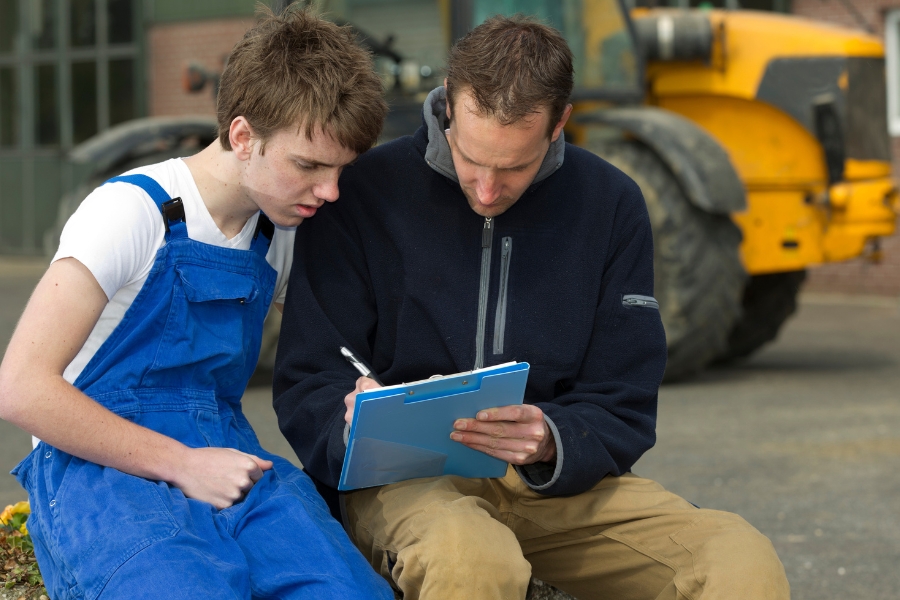
Most farms think about systems after something goes wrong.
A mistake. A misunderstanding. A handover that didn’t land. 

But one of the best times to build or strengthen systems is actually during onboarding — when a new person joins the farm. 

Not because they’re experienced.
But because they’re not.  

The Mistake: Expecting Systems to Be “Finished” Before Hiring 

Some farm owners try to get everything documented before bringing someone new on board. 

That’s a good instinct — but it comes with a trap. 

They expect the system to answer every question.
Then the new hire starts asking: 

  • “What happens if this changes?” 
  • “Why do we do it this way?” 
  • “Who decides if something’s different?” 
  • “Where does this get recorded?” 

And suddenly it feels like: 

“Didn’t I already explain this?” 

But those questions aren’t a failure of the system.
They’re proof it’s being used. 

Why New People See What You Can’t 

Experienced farmers and long-term staff operate on instinct.
They: 

  • skip steps without noticing 
  • assume background knowledge 
  • compress decisions mentally 
  • fill gaps automatically 

That’s not laziness — it’s expertise. 

But when those same people are asked to document a process on their own, important details get missed. Not intentionally, but because they don’t feel the gaps anymore. 

A new hire does.
They notice: 

  • what isn’t written down 
  • what isn’t clear 
  • what relies on “just knowing” 
  • where the handover breaks 

That makes them incredibly valuable system testers. 

Involving New Hires Creates Buy-In 

There’s another benefit that’s often overlooked: ownership. 

When new people are invited to help refine systems while learning: 

  • they feel trusted 
  • they understand the “why,” not just the “what” 
  • they stop guessing and start contributing sooner 

Instead of being told, “This is how we do it,”
they’re part of shaping how it actually works. 

That buy-in matters — especially on farms where people need to make decisions under pressure. 

Training + Documenting at the Same Time = Better Systems 

One of the strongest approaches we see on farms is this:
While training a new person, build or refine the system together. 

Here’s why it works: 

  • The trainer explains what they do 
  • The new hire asks questions 
  • Gaps are exposed in real time 
  • Assumptions get challenged 
  • The system gets clearer with every pass 

It’s slower the first time.
But it pays back every time after that. 

Systems Built This Way Are More Realistic 

Systems created in isolation often look good on paper but fall apart in practice. 

Systems built during onboarding are: 

  • grounded in real work 
  • tested immediately 
  • written in plain language 
  • shaped by real questions 

They’re not theoretical.
They’re usable. 

Don’t Be Alarmed by Questions — They’re the Point 

A common reaction we hear is: 

“If they’re asking this many questions, the system must be weak.” 

It’s usually the opposite. 

Questions mean: 

  • the system is being read 
  • the person cares about doing it right 
  • the gaps are being surfaced early 

Every unanswered question is an opportunity to strengthen the system — not just for this hire, but for the next five. 

What This Builds Over Time 

When farms use onboarding as a system-building moment: 

  • knowledge stops living in heads 
  • handovers get cleaner 
  • confidence grows faster 
  • dependency reduces 
  • resilience increases 

The farm doesn’t just train people.
It learns from them. 

Where Enable Ag Fits 

At Enable Ag, we encourage farms to treat onboarding as a two-way process: 

  • train the person 
  • improve the system 

We help farms: 

  • create simple, practical systems 
  • refine them during real use 
  • capture detail without overcomplicating 
  • use tools that make updating easy, not painful 

Because the goal isn’t perfect documentation.
The goal is clear, usable systems that improve every time someone new joins. 

Want to Use Onboarding to Strengthen Your Systems? 

The Ultimate Time-Freedom Checklist is a great place to start — especially if your team is growing and you want to build systems that scale with confidence. 

👉 Download the checklist here 

Don’t wait for perfect.
Use your next hire to build better systems — together. 

 If you found this article helpful, share it with your network to help others unlock their farming potential. Don’t forget to like and follow us on social media for more insightful tips: FacebookInstagram, and LinkedIn. Let’s empower more farmers together!

You don’t want to be the bottleneck.
But you also don’t want people messing with budgets, deleting records, or logging jobs in the wrong block. 

Welcome to the weird middle ground of farm system permissions. 

Most farm owners see access levels as a security setting — something buried in the back end. But the truth is, system permissions are a leadership tool. Get them right, and your team works faster with fewer interruptions. Get them wrong, and you either lose control… or spend your day double-checking everyone’s work. 

Here’s how to set up system permissions that protect what matters, empower your team, and let you step back without losing visibility.  

Note: System Permissions Aren’t About Trust — They’re About Focus 

This isn’t about locking people out because you don’t trust them. 

It’s about making sure people can: 

  • See what they need to see 
  • Do what they need to do 
  • Avoid the stuff that just gets in the way 

Control doesn’t mean seeing everything. It means seeing the right things at the right time — and building the same clarity for the rest of your team. 

Your system should show each person what matters to their role — nothing more, nothing less. 

 #1 Start With Three Levels — Then Adjust

Most systems let you create custom roles. Start with three buckets: 

 Full access (Owner/Manager) 

  • Financials 
  • Compliance and safety records 
  • Staff profiles 
  • Settings and structure 
  • Everything else 

⚙️ Mid access (Team leaders / experienced staff) 

  • Create and assign jobs 
  • Mark tasks complete 
  • Log records and notes 
  • View dashboards 
  • Access relevant SOPs 

🔒 Limited access (Casuals / seasonal workers) 

  • View assigned jobs 
  • Tick checklists 
  • Upload photos 
  • Report issues 

Start here. Then tweak based on who actually needs what. Don’t give access “just in case.” That’s how systems get messy. 

 #2 Protect Financial and Compliance Areas

You don’t want job details edited after a spray’s been applied. You don’t want someone adjusting paddock costs on a whim. And you definitely don’t want everyone seeing wage info. 

Set clear restrictions around: 

  • Cost tracking 
  • Input usage rates 
  • Payroll or HR fields 
  • Safety close-outs 
  • Regulatory reports 

Let your team log what they did. You handle what that means financially or legally. 

Good permissions prevent bad data — and keep your records clean. 

 #3 Give the Team Tools to Do the Job Without You

If someone has to ask you to assign a task… or check a location… or update a status… you’ve already become a bottleneck. 

Look at what slows the day down — then delegate it in the system: 

  • Can team leads assign their own crew tasks? 
  • Can someone log an issue without needing approval? 
  • Can they upload a photo of a hazard straight into the system? 

This isn’t about handing over full control. It’s about cutting small delays that pile up. 

Empowerment doesn’t mean less oversight. It means fewer interruptions. 

 #4 Use Visibility, Not Just Access

Sometimes someone shouldn’t be able to edit a job — but they should still be able to see it. 

Use “view-only” settings for: 

  • Upcoming jobs 
  • Jobs outside their area 
  • Safety-related notes 
  • Jobs from other teams (for awareness) 

This gives context without creating chaos. 

It also reduces the chance that someone creates a duplicate job just because they didn’t know one already existed. 

Let people see what helps them work better — and hide what doesn’t. 

#5 Audit Farm System Permissions Quarterly

Access levels are not “set and forget.” As teams shift, so should permissions. 

Once a quarter, check: 

  • Who still has full access that shouldn’t? 
  • Who got promoted but still can’t assign tasks? 
  • Who left but still has login access? 

Clean access = clean data = fewer mistakes. 

The system should reflect the real team. Not last season’s. 

Farm System Permissions Shouldn’t Be a Headache 

They should be a shortcut to smoother workflows. 

 Less noise
 Fewer errors
 Less micromanaging
 More clarity for everyone 

Done right, permissions aren’t about control. They’re about confidence — knowing the team can move without breaking anything. 

Want to Make Room Without Losing Oversight? 

The Ultimate Time-Freedom Checklist is designed for farm owners who want to step back from day-to-day chaos — without losing control of the operation. 

It includes tools to: 

  • Delegate clearly 
  • Reduce team dependency 
  • Identify admin bottlenecks 
  • Build real freedom into your systems 

👉 Download the checklist or join the newsletter 

More confidence. Less micromanaging. 

If you found this article helpful, share it with your network to help others unlock their farming potential. Don’t forget to like and follow us on social media for more insightful tips: FacebookInstagram, and LinkedIn. Let’s empower more farmers together!

You’re writing the job on the whiteboard.
Then texting the team.
Then adding it to a spreadsheet later.
Maybe even repeating it in an email or notebook for good measure. 

That’s not admin. That’s double-handling. 

Most farms lose hours every week to duplication. Not just double-handling — sometimes triple or more. It creates noise, confusion, and missed jobs. The kicker? You’re not fixing problems. You’re just copying them around. 

You don’t need more software. You need a better way to use what you’ve already got. 

Here’s how to stop rewriting the same thing in three places — and build a single source of truth the whole team can rely on. 

 #1 Pick One Place for Job Instructions — and Kill the Others

The whiteboard says one thing.
The group chat says another.
The spreadsheet? That hasn’t been updated since last week. 

This is where jobs get missed. 

Fix it by choosing one spot for job instructions. Make it the rule: “If it’s not there, it’s not real.” 

Options: 

  • Use your farm management app 
  • Use a shared task sheet 
  • Use printed job sheets if needed — but only one version 

Then cut off the extras. No job goes in a text and the whiteboard. No duplicate photos in both a notebook and a Google Drive folder. 

Clarity doesn’t come from more places. It comes from fewer. 

 #2 Link Records to the Job —Don’t Save Them Somewhere Else 

You’re doing the right thing: taking photos, keeping spray records, writing down harvest weights. 

But if they’re saved randomly — in phones, camera rolls, notebooks, folders — you’ve just created another job: finding them later. 

Instead, link them directly to the job they belong to. 

Good farm systems let you: 

  • Snap a photo inside the job card 
  • Upload a file to the task 
  • Add notes or attachments in one spot 

If your tool doesn’t do this, time to find one that does — or build a folder system that mirrors your job sheet layout. 

The job is the container. Everything else should live inside it. 

 #3 Use Templates for Repeat Jobs (So You’re Not Rewriting Details)

How many times have you typed the same chemical rate?
Or rewritten the same harvest instructions?
Or listed the same pre-start checklist? 

Save that time. 

If you do a task more than twice a season, template it. Most task apps and farm systems let you: 

  • Save recurring jobs 
  • Copy previous task details 
  • Create checklist templates 

This means no one has to reinvent the wheel — or forget something critical because the info was left out this time. 

Templates reduce mistakes and retyping. Use them wherever you can. 

 #4 Make Better Use of the Group Chat

Texts and WhatsApp feel fast. Until you’re 17 messages deep and can’t remember who said what — or what actually got done. 

Here’s what gets lost in group chat: 

  • Confirmations 
  • Photos 
  • Quick decisions 
  • New risks or issues 

And then someone has to go and log it “properly” later. 

The fix isn’t banning messages. It’s drawing the line: 

“If it’s a task update, log it in the system.”
“If it’s a quick heads-up, text away.” 

Make the system the final record — not the chat thread. That’s how you reduce double-handling, not add to it. 

If it’s important, it doesn’t belong in messages only.

#5 Review Your “Paper Trail” Once a Month

You don’t need to track everything digitally. But if you’ve got: 

  • A whiteboard 
  • A diary 
  • A folder of job sheets 
  • A spreadsheet 
  • An app
    …you need to decide which one is the master source. 

Run a monthly check: 

  • Where are people actually recording jobs? 
  • What’s being double-entered? 
  • What’s not being used anymore? 

Kill the duplicates. Archive the unused. Merge what’s still relevant. 

A system isn’t helpful if no one trusts it — or if it creates more work. 

Start With Just One Fix 

You don’t need to overhaul everything overnight. But you do need to stop the bleeding — because every extra entry is time you’re not getting back. 

Start with one of these: 

  • Kill off the whiteboard or the chat thread 
  • Link records to the job instead of saving elsewhere 
  • Create one checklist template you can reuse this month 

Then watch what happens when the team only has to write things once.  

Want to Free Up More Time? 

We’ve created the Ultimate Time-Freedom Checklist to help you identify the hidden admin drains that chew up your week — and start cutting them out, fast. 

It’s not about working faster. It’s about setting up smarter systems that give you back time, control, and breathing room. 

👉 Download the checklist or join the Enable Ag newsletter 

Less rework. Fewer double-ups. More time doing what matters. 

If you found this article helpful, share it with your network to help others unlock their farming potential. Don’t forget to like and follow us on social media for more insightful tips: FacebookInstagram, and LinkedIn. Let’s empower more farmers together!

Most farmers take pride in being needed. 

Being the one who: 

  • knows how things really work 
  • spots problems before they blow up 
  • holds the place together when pressure hits 

For years, that capability is what keeps the farm moving. It’s admirable. It’s earned.
And it often becomes part of identity. 

But there’s a line most farms cross without noticing —
The point where being needed stops being a strength — and becomes a risk. 

When Capability Turns into Dependency 

Farm resilience is mistaken for toughness. 

Long hours.
Constant availability.
Always stepping in. 

But resilience isn’t about how much pressure you can absorb.
It’s about how well the system functions when pressure arrives. 

If everything depends on one person’s presence, memory, or judgement, the farm isn’t resilient.
It’s just holding together. 

The Warning Signs of Fragility 

Fragile farms often look successful on the surface. Stock moves. Crops get in. Bills get paid. 

But underneath, there are signs: 

  • No one is fully confident making decisions without you 
  • Time off creates anxiety, not relief 
  • The same questions come back again and again 
  • Handover is messy or non-existent 
  • Growth feels heavier, not easier 

Nothing is “wrong” — but nothing is robust either.  

Why This Happens (Even on Good Farms) 

Fragility doesn’t come from poor leadership.
It comes from capability without structure. 

Good farmers: 

  • solve problems quickly 
  • carry knowledge in their heads 
  • adapt on the fly 

Over time, the business quietly reorganises itself around them. 

And without meaning to, they become: 

  • the decision-maker 
  • the reminder system 
  • the quality control 
  • the safety net 

That works — until it doesn’t. 

Farm Resilience Is Designed, Not Discovered 

True resilience doesn’t appear in a crisis.
It’s built beforehand. 

Resilient farms have: 

  • clear ways decisions are made 
  • shared understanding of priorities 
  • simple systems that carry knowledge 
  • people who can step up without fear 

Not because everyone is perfect — but because the structure supports them. 

The Shift from “I’m Needed” to “We’re Ready” 

This is the hardest shift for many farmers. 

Moving from: 

“I need to be involved in everything”
to:
“The system can handle this without me” 

That doesn’t mean disengaging.
It means leading differently. 

Your value moves from: doing to designing 

From: reacting to preparing

From: being the solution to building one 

Farm Resilience Benefits

When dependency reduces: 

  • decisions get made sooner 
  • mistakes get caught earlier 
  • people grow in confidence 
  • pressure drops from the top 

Time off stops feeling risky.
Succession stops being theoretical.
Growth stops feeling fragile. 

The farm becomes something that can carry itself, not just survive through effort. 

A farm that runs because one person holds everything together is vulnerable — no matter how capable that person is.
Resilience lives in the structure, not the individual. 

Where Enable Ag Fits 

At Enable Ag, our work isn’t about taking farmers out of the picture.
It’s about making sure the farm doesn’t fall apart when they step away. 

We help design: 

  • simple systems that hold knowledge 
  • decision frameworks that reduce hesitation 
  • processes that support people under pressure 
  • structures that allow the farm to function without heroics 

Because strong farms don’t rely on constant intervention.
They rely on clarity, discipline, and systems that work quietly in the background. 

Want to See Where Your Farm Is Relying Too Heavily on You? 

The Ultimate Time-Freedom Checklist shows you exactly where dependency is creeping in — and how to design resilience into your operations without overwhelm. 

👉 Download the checklist here 

You don’t need to be less involved.
You need a system that makes being away less risky. 

If you found this article helpful, share it with your network to help others unlock their farming potential. Don’t forget to like and follow us on social media for more insightful tips: FacebookInstagram, and LinkedIn. Let’s empower more farmers together!

You’re stuck at a field day. Or down with the flu. Or finally taking two days off. 

Could your farm still run — without the team calling you ten times a day? 

If the answer is no, you’re not alone. Most farms are built around the owner’s headspace. That works… until you’re not there. Then it all falls over. 

The good news? You don’t need to “step back.” You just need to build systems that make you less essential by default. 

That’s where a farm management system becomes more than just job tracking — it becomes a proper handover tool.  

The Real Test: Is Your Farm Handover-Ready? 

Forget big-picture business planning. Ask something simple: 

If you walked away today, could your team get through the next 5 days without needing you for every decision? 

  • Would they know what needs doing? 
  • Would they know how to do it? 
  • Would they know where to find the info? 
  • Would they know what’s done vs not done? 

If not, you’re running on memory, not systems. And that’s risky.  

Build “Handover-Ready” Job Cards 

Job cards are more than just task names. A proper job card gives enough information for someone else to pick it up and get it done without needing to ask. 

A handover-ready job card includes: 

  • Clear job name 
  • Location/block/mob 
  • Task steps or checklist 
  • Attachments (maps, labels, photos) 
  • Who’s assigned 
  • Due date/time 
  • Notes or warnings 

The aim? No phone calls needed to fill in the blanks. 

The better the card, the less chasing you get later. 

Add SOPs Where It Matters 

You don’t need a full policy manual. But you do need Standard Operating Procedures for anything that could go wrong if done wrong. 

Examples: 

  • Chemical mixing 
  • Machinery servicing 
  • Livestock treatments 
  • Record keeping for compliance 
  • Safety-critical tasks (heights, electrical, confined spaces) 

Put these SOPs inside your system — not as a dusty binder in the shed. 

Best formats: 

  • PDF attachment on the job 
  • Linked video or photo walk-through 
  • One-pager cheat sheet 

Make it easy to find in the moment, not three layers deep in Google Drive. 

Good SOPs stop bad decisions when you’re not there. 

Use Dashboards That Show “What’s Done” Without Asking 

Most farm managers still find out what’s been done by walking around or asking five different people. That’s not a system. That’s you being the system. 

A dashboard solves that. 

The right dashboard should show: 

  • What’s completed 
  • What’s overdue 
  • What’s in progress 
  • Who’s doing what 
  • Outstanding WHS actions 
  • Issues flagged by the team 

It’s not about micromanaging. It’s about visibility. If you can see the status from one screen, you don’t have to ask. 

Dashboards aren’t just for you — they’re for whoever covers when you’re away.  

The Shift: From Hero to System Builder 

Right now, you’re probably the “go-to” person. The one who knows what’s in your head, what’s urgent, what can wait. 

It works — until you get burnt out or pulled away. Then no one knows what’s going on. 

The better path? Be the one who builds the system, not runs everything personally. 

Let the tech do the remembering. Let the team take more ownership. Let the jobs be clear enough that you don’t need to explain them every time. 

The less you’re needed day-to-day, the more you can focus on what actually grows the business.  

Run Your Own Handover Test 

Try this: 

  • Take a random week from the calendar 
  • Hand it to a senior staff member (or imagine you had to) 
  • Could they run it from the info in your system? 

If yes — you’re in great shape.
If not — you’ve got a clear target to fix. 

The fix isn’t harder work. It’s cleaner systems: 

  • Better job cards 
  • Attached SOPs 
  • Visibility on progress 
  • One spot to find everything 

You don’t need more meetings. You need a system that lets you not be the meeting.  

Want to Make Your Farm “Handover-Ready”? 

We’ve created a simple job card to help you test your setup and start plugging the gaps — fast. Download it here.

Take the pressure off your brain. Build a system that works — even when you’re not there. 

If you found this article helpful, share it with your network to help others unlock their farming potential. Don’t forget to like and follow us on social media for more insightful tips: FacebookInstagram, and LinkedIn. Let’s empower more farmers together!

You’ve got the whiteboard.
You’ve got the group texts.
You’ve got a weathered notebook that only one person can read. 

And somehow… it works. Until it doesn’t. 

Someone forgets to snap a photo of the spray record. The job board gets wiped before everything’s ticked off. Someone’s off sick and no one knows what they were working on. 

This is what we call a whiteboard farm. And if you’re still running one, you’re not alone. But there’s a better way — without overwhelming yourself or your team. 

What Is a Whiteboard Farm? 

  • Daily jobs live on a shed whiteboard 
  • Staff text or call when jobs are done 
  • Chemical records live in a folder, maybe 
  • Breakdowns are mentioned… if someone remembers 
  • Payroll is based on memory and group chat timestamps 

This system isn’t broken — it’s just brittle. It works when the same people are around every day and nothing unexpected happens. 

But ag doesn’t work like that for long. 

The Goal Isn’t Software. It’s Structure. 

Most farmers don’t avoid tech because they’re anti-progress. They avoid it because change sounds like more admin. 

But the goal of moving off the whiteboard isn’t “going digital.” It’s building a system that: 

  • Doesn’t rely on memory 
  • Makes it easy to hand over jobs 
  • Helps you make faster decisions 
  • Keeps records without chasing people 

This isn’t about tech for tech’s sake. It’s about making sure the farm runs smoother, not harder. 

Step 1: Take One Job Type and Capture It Better 

Don’t start by trying to recreate your entire whiteboard in an app. 

Pick one job type. Something common. Like: 

  • Spraying 
  • Harvest logistics 
  • Irrigation schedules 
  • Maintenance requests 

Write down exactly what’s needed to get that job done and signed off properly. Then look at how to set that up in your chosen farm management tool. 

Use the app just for that at first. Get the process right. Make it work in the paddock. Then move on to the next type of job. 

Step 2: Turn Whiteboard Lists Into Digital Checklists 

Don’t let good structure die on the whiteboard. 

If there’s a jobs list you rewrite every week, turn it into a reusable digital checklist. 

For example: 

  • Fuel tanks topped up 
  • Filters checked 
  • Chemical shed inspected 
  • Washdowns logged 
  • Safety signoffs recorded 

The trick here is low effort. Staff should be able to tick it off on their phones as they go — no typing, no remembering later. 

Step 3: Get Group Chat Data Out of the Void 

Important info gets lost in group chats all the time: 

  • “Fixed the pump” 
  • “Did the east paddock” 
  • “Need to order more 450” 

Pull these messages into real records. That means: 

  • Linking notes to jobs 
  • Recording completions inside your system 
  • Using in-app comments or notes instead of SMS 

If it’s not in the system, you can’t track it. If it’s hard to enter, it won’t get done. So the system has to work better than texting, or it won’t stick. 

Step 4: Stop Worrying About “Going Fully Digital” 

You don’t need to ditch the whiteboard. You need to make it less of a single point of failure. 

Think of the new system as a backup brain. A place where: 

  • Anyone can see what’s been done 
  • Staff can pick up where someone left off 
  • You can trace a decision two months later 
  • Compliance records are stored automatically 

You’re not trying to change everything overnight. You’re building a version of your whiteboard system that actually holds up under pressure. 

Step 5: Run the Old and New Side-by-Side (for a Bit) 

Make the transition smoother by overlapping systems for a short time: 

  • Keep writing jobs on the whiteboard 
  • Also assign them in the app 
  • Tick both off for the first couple of weeks 

This gives your team space to get used to the new process without losing what they already know. Then, once it clicks, the whiteboard farm strategy starts collecting dust on its own. 

Need a Migration Map? 

You can join the Enable Ag newsletter for more real-world advice, tools, and examples from other ag businesses making the switch. 

If you found this article helpful, share it with your network to help others unlock their farming potential. Don’t forget to like and follow us on social media for more insightful tips: FacebookInstagram, and LinkedIn. Let’s empower more farmers together!

Everything’s on fire—figuratively or literally—and someone wants to talk software. 

One minute it’s asset tracking. The next, it’s WHS compliance. Then comes the accountant with questions about cash flow. You’re stuck trying to get it all under control, but nothing’s slowing down. Choosing where to begin with a farm management system feels like flipping coins while the shed’s burning down. 

So, what actually makes sense to tackle first? 

Short answer: it depends on where it hurts. The “No Wrong Door” Rule in Farm Management System

If you’ve hit breaking point, there’s probably more than one area of the business feeling messy. But you don’t have to fix everything at once. Trying to set up every feature in a farm management system from the start is a guaranteed way to burn time and frustrate the team. 

Start with a single area of pain. Think of it as choosing one pressure valve to release. 

Here’s how to figure out where to begin. 

If the Problem is Jobs: Start with People and Tasks 

You’re losing track of what’s been done. The spray records are half in someone’s notebook, half in a whiteboard photo on someone else’s phone. Staff are asking the same questions twice. You’re repeating yourself. Harvest logistics are a mess. 

Start here: Task and Job Management. 

Suggestions: 

  • Assigning clear jobs and due dates 
  • Centralising task notes 
  • Logging chemical applications properly 
  • Having a simple daily job list for the team 

This gets everyone aligned fast and clears your headspace. Look for a tool that makes job creation and tracking simple, not just for you but for whoever’s holding the phone in the paddock. 

If the Problem is Assets: Start with Your Gear 

Repairs are reactive. You’re not sure where the spare parts are. Something breaks down and the manual’s missing. You’ve bought the same filter three times because no one knew one was already in the shed. 

Start here: Asset Tracking. 

Suggestions: 

  • Logging machinery details, manuals, parts 
  • Scheduling maintenance 
  • Recording breakdowns and servicing 
  • Tagging key tools and equipment locations 

This area gives fast wins by cutting waste and avoiding downtime. A good farm management system here means fewer headaches on Monday mornings and better handover when multiple people use the same gear. 

If the Problem is Compliance: Start with WHS and Record Keeping 

An audit’s coming. Someone’s had a near-miss. You’re not confident about your chemical records, training logs, or inductions. Things have been done properly—probably—but you’re not sure you could prove it. 

Start here: Safety and Compliance. 

Suggestions: 

  • WHS policies, procedures, and acknowledgements 
  • Chemical usage and storage records 
  • Safety checklists 
  • Training and induction tracking 

It’s not about ticking boxes. It’s about protecting people and the business. A strong compliance system helps you sleep at night and avoid drama if something goes wrong. 

If the Problem is Money: Start with Finance 

You don’t know what’s profitable and what’s just costing you. Your accountant is asking for figures you can’t pull together. There’s cash going out, and not enough clarity on what’s coming back in. 

Start here: Financial Tracking and Cost Analysis. 

Suggestions: 

  • Linking activities to costs (e.g. per block or mob) 
  • Tracking input spending 
  • Labour cost tracking by job 
  • Building a basic P&L by operation 

This is where most farmers want to get to—but it often has to come later. Unless jobs, assets, and compliance are being tracked properly, your financial data will be messy. If you’re in a position to start here, great. Just don’t try to run full cost analysis if the foundations are chaos. 

What Comes Next to Farm Management System?

Once you’ve made progress in one area, the others get easier. Task management feeds into compliance records. Asset tracking ties into job planning. Better financial clarity makes investment decisions simpler. 

Start small, move fast, and don’t get distracted by features you don’t need yet. Think less about software setup, more about solving problems. 

Common Traps to Avoid in your Farm Management System

  • Trying to start everywhere at once
    You’ll burn out and end up worse off. 
  • Waiting for the “perfect time”
    It doesn’t exist. Start with one pain point and fix it properly. 
  • Overcomplicating the setup
    The goal isn’t data. The goal is clarity and better decisions. 
  • Buying before mapping your pain
    Don’t choose a system based on shiny features. Choose one that helps with your biggest headache today. 

Don’t try to fix everything at once or wait for the perfect time. Start with one clear pain point, keep things simple, and choose tools that solve real problems—not shiny features.

Not Sure Where to Begin? 

We’ve built a free checklist to help you figure out which area to focus on first. You can also join our newsletter for practical tools, real farm stories, and no-fluff advice on running a better operation. 

Take 5 minutes now. Save 50 later. 

If you found this article helpful, share it with your network to help others unlock their farming potential. Don’t forget to like and follow us on social media for more insightful tips: FacebookInstagram, and LinkedIn. Let’s empower more farmers together!

Why two farmers with the same land, same hours, and same work can live entirely different lives.

Two farmers can live the same life on paper and a completely different life in reality. Same land. Same seasons. Same hours. Same challenges.

And yet, one ends the year exhausted and overwhelmed… while the other ends it calm, organised, and in control.

The difference isn’t luck, intelligence, or personality.
It’s the psychology of systems.

Hard work builds farms.
Systems build lives.

To understand this, let me tell you about two farmers.

Farmer One: The Good Operator

Farmer One grew up doing things the way his parents did. He knows his land like his own skin. Every gate that sticks, every trough that leaks, every cow with attitude — it’s all in his head. His days are always full, and that busyness feels necessary. If he’s not flat out, something must be wrong.

His team respects him, but they rely on him for everything — and he wears that like a badge of honour.

When a worker forgets a task, he thinks: “It’s quicker if I just do it myself.”
When someone suggests a new idea: “We’ve always managed fine.”

He’s not lazy. He’s not careless. He cares — deeply. But over time, the farm becomes a mirror of his mind: crowded, reactive, overloaded, always in motion.

Every problem feels urgent. Every breakdown feels personal.
And when systems are mentioned? “I don’t need a fancy system. I just need people to do their job.”

But deep down, he knows the truth.
He’s tired. And the farm can’t run unless he’s there.

A farm run on memory is a farm held together by strain.
This isn’t about skill. It’s about belief.

He believes systems are for big business, not for people like him.
He believes his memory can carry the load.
He believes chaos is normal.
And beliefs shape behaviour long before systems ever do.

Farmer Two: The Quiet Builder

Farmer Two isn’t smarter. He isn’t luckier. He doesn’t have fewer challenges. In fact, for years, he worked just like Farmer One — long hours, everything in his head, fixing problems as they showed up… and quietly proud the farm “needed” him.

Then came a moment of truth — the kind every farmer knows.

It was calving season. He hadn’t eaten all day. A worker misunderstood him. The animals were stressed. He was stressed. And he realised: “I’m repeating the same problems every season.”

That’s when he saw it clearly.
The farm wasn’t the problem.
The lack of systems was.

Not technology. Not dashboards. Just clarity.

So he started small.
One checklist in the dairy.
One weekly planning rhythm.
One paddock treatment sheet.
One short handover chat instead of assuming people understood.

At first, it felt slow — awkward, even. Like learning to write with his non-dominant hand.

Most farmers think systems restrict them.
The truth is, systems remove the weight that’s been restricting them for years.

Then something surprising happened.

The team stopped asking the same questions.
Mistakes dropped.
Jobs flowed.
He stopped carrying the mental burden of remembering everything.

Systems didn’t make him rigid — they made him calm.

He wasn’t less busy — just busy with purpose.
He wasn’t less involved — just involved in the right things.
He wasn’t less important — he was finally leading, not just operating.

He created time not because the farm needed less of him,
but because the farm finally understood him.

Two Farmers. One Difference.

These two farmers live in the same economy.
They face the same weather.
They work the same hours.
They deal with the same stress.

The difference?

Farmer One believes systems are extra work.
Farmer Two believes systems replace work.

Farmer One trusts his memory.
Farmer Two trusts his process.

Farmer One thinks calm means he’s missing something.
Farmer Two sees calm as a sign the farm is maturing.

Farmer One lives inside the farm.
Farmer Two lives above it.

One is consumed by the noise.
The other directs the rhythm.

The Psychology Behind It

The psychology of systems is simple, but rarely talked about.

  • People don’t resist systems because they’re complicated.
    They resist them because systems expose how much they’ve been carrying alone.
  • Systems feel confronting because they force clarity.
    And clarity removes excuses.
  • Chaos is seductive — it feels like movement.
    But structure creates actual progress.
  • Systems aren’t about writing things down.
    They’re about letting go.

Not of the farm.
Not of responsibility.
But of the belief that everything depends on you.

Final Reflection

Farmer One isn’t wrong. Farmer Two isn’t better.
They’re simply walking different psychological paths.

One holds the farm together.
The other builds it to stand without him.

And the truth is — both paths are available to every farmer.
But only one leads to calmer seasons, stronger teams, time-freedom, and a business that doesn’t burn you out.

Systems won’t make you perfect.
They won’t stop breakdowns or bring rain.

But they do something more powerful:
They protect your mind.
They steady your team.
They turn chaos into clarity.
And they give your future space to grow.

Farmer One will keep working hard.
Farmer Two will keep building smart.

Both care deeply.
But only one will look back in ten years and say:
“I built a business that didn’t cost me my life.”

Every season shapes your farm.
But the systems you build shape your life.
And in the end, that’s the harvest that matters most.

A Quiet Word to Farmers Who Want to Change Their Story

If you saw yourself in Farmer One — that’s normal. Most farmers start there.
You’re not behind. You’re not failing.
You’ve just been carrying more than anyone should.

The shift starts small.
One habit.
One routine.
One system that frees five minutes… then ten… then hours.

And if, one day, you decide you want a guide on that journey — someone who walks at your pace, in your way — I’m here for that.

If you found this article helpful, share it with your network to help others unlock their farming potential. Don’t forget to like and follow us on social media for more insightful tips: FacebookInstagram, and LinkedIn. Let’s empower more farmers together!

Are you familiar about a farm software? Most farmers I meet don’t think of themselves as “tech people.” They see software as something office folks use — not a tool for paddocks, livestock, or tractors. But here’s the truth: when chosen well, software is more than just technology. It’s a silent coach. It brings with it proven ways to run things better, cleaner, and faster — without adding more work.

Dan Martell, author of Buy Back Your Time, put it perfectly:

“When you invest in software for your business, you’re not just buying code — you’re buying best practices baked into it.”

That insight applies beautifully to farms. Because when you use the right tool, you don’t just automate a job — you learn how professionals run that area of their business.

Why a Good Farm Software Teaches You Good Habits

Think about it. A well-designed program doesn’t just do the work; it shows you how the work should flow.

  1. A task management app helps you delegate clearly and prevent double handling.
  2. A maintenance tracker teaches you to log machinery checks before they become breakdowns.
  3. A CRM tool for livestock sales makes follow-ups systematic instead of last-minute.

Every good system quietly builds better habits. And when you commit to using it properly — not half-heartedly — it becomes your farm’s best business mentor.

But There’s a Catch: You Have to Practice Using the Farm Software

Installing software doesn’t create time overnight.

It’s like putting a new header in the shed — it won’t harvest for you unless you learn to drive it well. Every time you adopt a tool, you’re also adopting a set of standards:

  1. How data is entered
  2. How records are shared
  3. How often tasks are reviewed

At first, it might feel slower. But with practice, it shifts chaos into rhythm. Within a few weeks, you’ll find fewer “where’s that file?” moments and more confident decision-making.

When There’s No Perfect App — Create Your Own

Sometimes there’s no ready-made app for your unique process. That’s where Smartsheet comes in — a simple, Excel-based tool that’s powerful enough to systemise just about anything on your farm.

Whether it’s tracking paddock treatments, training records, or machinery jobs, Smartsheet lets you build systems that fit your workflow instead of forcing you into someone else’s.

And the best part? It’s accessible and easy to learn — even for those who don’t love tech.

How We Help at Enable Ag

At Enable Ag, we help you close the gap between technology and time freedom in three key ways:

  1. Custom Smartsheet Templates: Purpose-built for Australian and New Zealand farms, these templates turn complex tasks — from team management to compliance tracking — into simple, repeatable systems.
  2. Practical Courses for Everyday Apps: We’ve designed short, easy-to-follow courses that boost productivity on the applications farmers use most. You name it, we likely have a course for it.
  3. Courses for Modern Tools from Other Industries: We also train you on the most valuable apps being successfully adapted into agriculture — the ones that bring automation and speed without complexity.
  4. Coaching to Increase Digital Literacy: Through our Farmers’ Time-Freedom Program, we coach you and your team to confidently use these tools and weave them into your daily workflow — so the tech serves you, not the other way around.

These tools and trainings don’t just save time — they teach structure, boost confidence, and help your team move together with clarity and consistency.

If you want to explore how we can tailor these systems to your farm, book a quick call here.

Final Thought

When you invest in software — you’re really investing in structure. And structure is what creates time. Good systems don’t replace people; they empower them. They make your farm easier to run, easier to hand over, and easier to enjoy.

Because in the end, technology isn’t about screens and spreadsheets —it’s about giving you the freedom to live the life you built this farm for.

If you found this article helpful, share it with your network to help others unlock their farming potential. Don’t forget to like and follow us on social media for more insightful tips: FacebookInstagram, and LinkedIn. Let’s empower more farmers together!